(303) 999-8864

Benjamin Moore Spring Meadow 486 | Belcaro Denver
See how Benjamin Moore Spring Meadow 486 performs in this 1938 Belcaro Denver Georgian. DAECO Painting details high-altitude UV prep and historic plaster care.
COLOR PALETTESLOCAL SERVICESHOME IMPROVEMENTBENJAMINE MOORE PAINTS
DAECO PAINTING
2/15/20265 min read
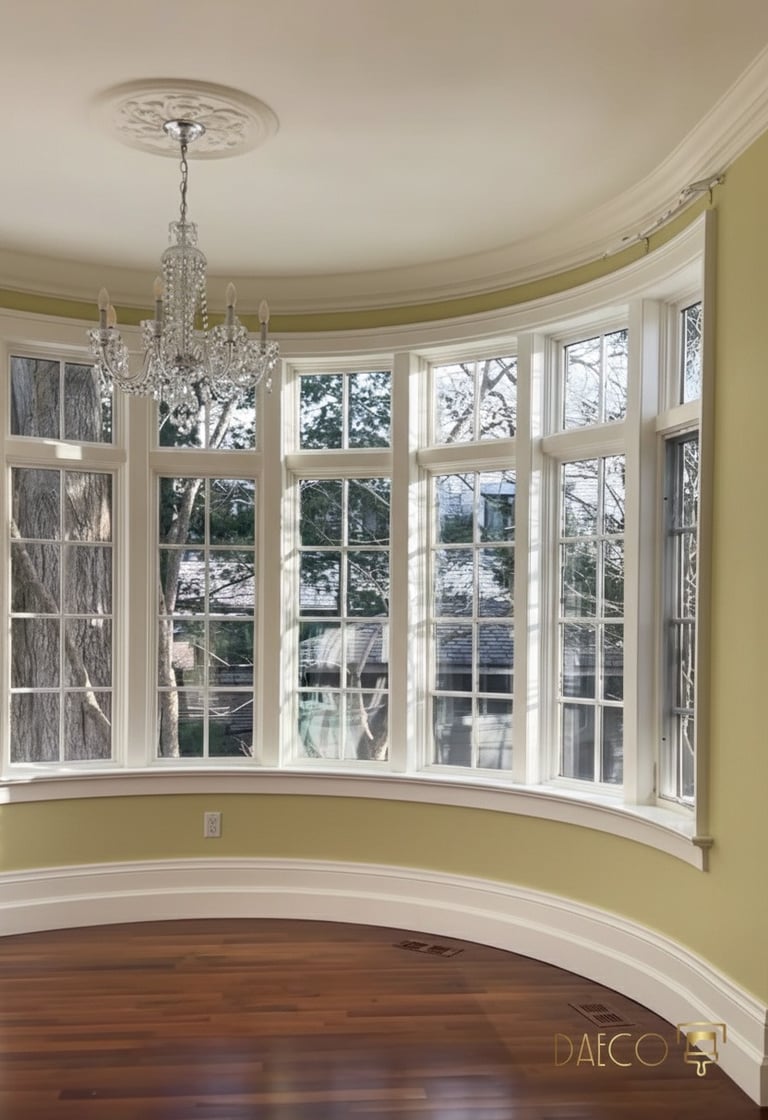
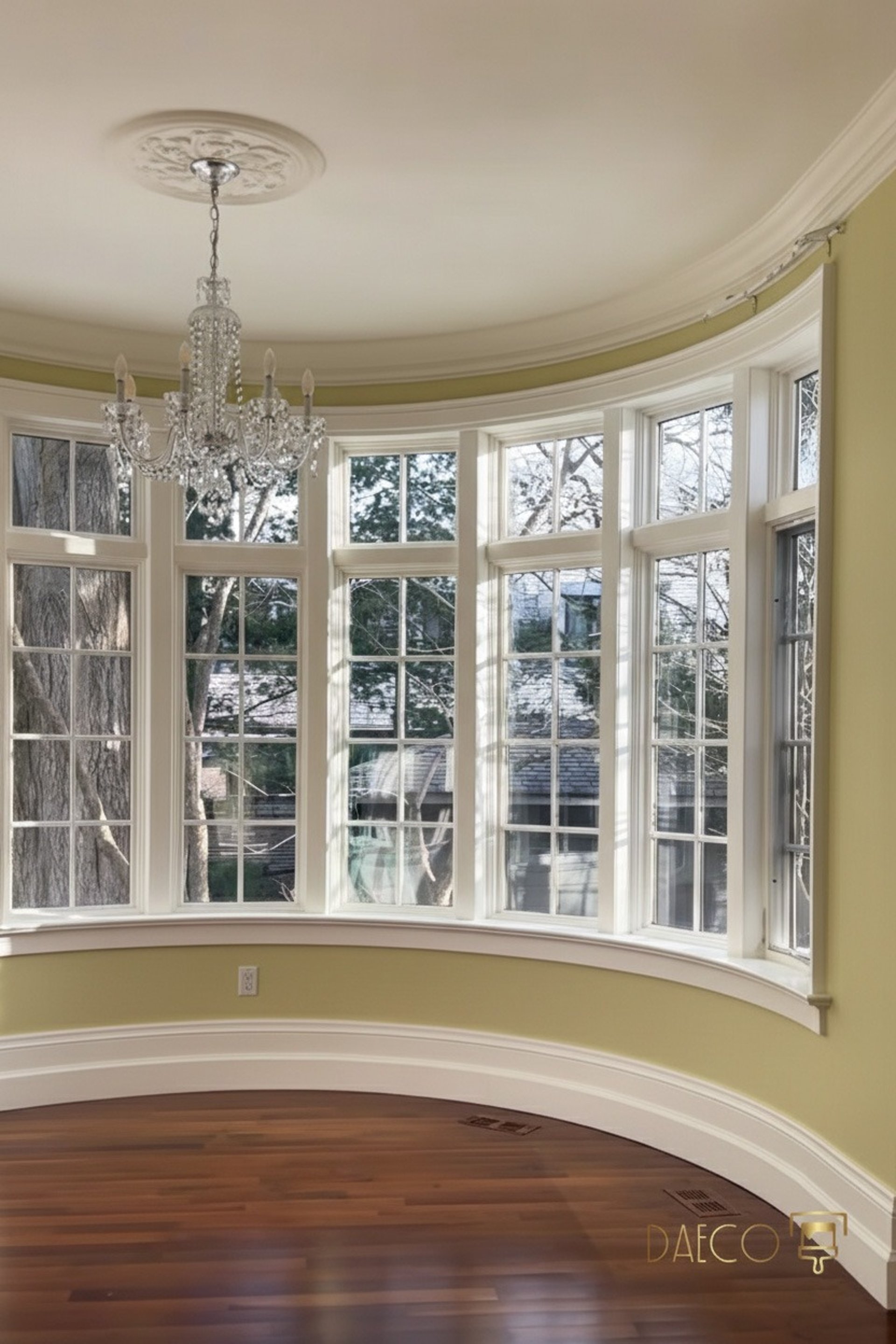
In a 1938 Georgian Colonial on Belcaro Drive, just three blocks south of the Phipps Mansion in Denver 80209, morning light passes through twelve-over-twelve divided windows and settles onto walls finished in Benjamin Moore Spring Meadow 486. The effect is neither announcement nor whisper—it's calibrated presence. The room doesn't perform; it inhabits. This is the discipline DAECO Painting, serving Denver since 2003, brings to Belcaro's particular architectural vernacular: restrained elegance built on oversized lots where pretension has no purchase. The green reads as soft aloe under direct eastern sun, muted moss when clouds roll over Belcaro, and something nearly silvered at dusk. In a neighborhood defined by the 27,000-square-foot "beautiful dear one" estate that Lawrence C. Phipps built in 1932, subtlety is the prevailing material language.
Spring Meadow 486 is not contemporary trend work. It predates the sage-green social media cycle by decades, residing in Benjamin Moore's Classics Collection as a study in warm neutrality with intention. The color carries a Light Reflectance Value of 56.85—a technical midpoint that translates emotionally as "present without insistence." It reflects enough light to keep Belcaro's generous room volumes from feeling cavernous, while maintaining sufficient pigment density to register as an actual design decision rather than safe retreat into builder beige.
The Atmospheric Foundation and Its Structural Anchor
Spring Meadow functions as the atmospheric foundation in this primary suite—a yellow-green with greige undertones that prevent it from skewing minty or juvenile. In Denver's high-altitude light, which delivers 18% more UV intensity due to reduced atmospheric filtration at 5,280 feet, this color performs a specific optical task: it absorbs the sharp wavelengths that make cooler greens appear clinical, and reflects the warmer spectrum that creates what interior designers describe as "spatial breathability." The result is a room that feels oxygenated, not decorated.
The accent color—Benjamin Moore Hale Navy HC-154—appears on the built-in window seat cabinetry and the picture rail molding that runs continuous at 8'6". Hale Navy carries an LRV of 6, making it nearly 90% less reflective than Spring Meadow. This contrast is structural, not decorative. The deep navy absorbs light where the green reflects it, creating visual ballast that prevents the 16-foot ceiling height from reading as institutional volume. In a room with southern and eastern exposures overlooking mature elms that predate the 1964 Phipps donation to the University of Denver, this pairing manages the dramatic color temperature shifts that occur as sun arcs from dawn to late afternoon.
For the Spring Meadow application, we specified Benjamin Moore Regal Select in Matte finish. Matte (distinct from flat) at this LRV offers superior hide and depth while remaining cleanable—critical in a room with original quarter-sawn oak floors and a Carrara marble hearth surround that generate fine particulate. The Hale Navy received Pearl finish to introduce subtle sheen that catches raking light without appearing glossy. Both sheens were selected after Color Rendering Index (CRI) testing under the client's 3000K LED system—warmer than standard residential specification, chosen deliberately to emphasize the yellow base in Spring Meadow rather than neutralize it.
The DAECO System: Substrate to Atmosphere
This project required full substrate remediation. The existing finish was a 1980s oil-based enamel, glossy and ambered from decades of UV exposure through south-facing glass. Removal was non-negotiable. We employed chemical softening followed by 180-grit Festool ETS EC 150/3 orbital sanding with certified HEPA extraction. Dust generated from historic Denver plaster contains silica and trace lead; containment is regulatory requirement and professional standard.
Once stripped to bare plaster, we identified and stabilized four areas of historic settlement cracking using flexible acrylic caulk rated for thermal movement—essential in a structure experiencing 60-degree temperature differentials between January nights and July afternoons in Belcaro's microclimate. Primer was Benjamin Moore Fresh Start, applied via airless sprayer at 2,800 PSI through a .015 tip to achieve full pore saturation. Plaster in these 1930s Georgians is dense and absorptive; roller application leaves microscopic voids that telegraph through topcoats as texture variation.
Two finish coats of Regal Select followed, each applied via HVLP turbine system for factory-grade atomization. The second coat was applied perpendicular to the first to eliminate directional texture. Final dry-film thickness measured 4.2 mils—sufficient for long-term durability without the plastic surface quality that results from over-building.
The Hale Navy on window seat cabinetry required additional protocol. We applied shellac-based stain blocker after discovering tannin migration from original red oak substrate, then two coats of Advance waterborne alkyd in Pearl. Advance cures to furniture-grade hardness over 30 days, which matters on surfaces subject to daily contact.
A Common Misconception About Choosing Paint in Belcaro
There's a persistent assumption in Belcaro that "historic neighborhoods require historic colors." The logic appears sound: Georgian architecture should receive colonial palettes. This thinking is historically inaccurate and aesthetically limiting.
Spring Meadow works in this 1938 Georgian not because it mimics period precedent, but because it corresponds to the material reality of the structure. The yellow-green undertone mirrors the oxidized copper downspouts, the lichen on exterior Indiana limestone, and the aged oak floors that have ambered over 86 years. It doesn't replicate colonial Williamsburg; it continues the material story this specific house is telling in this specific Denver microclimate. A cooler green with blue or gray dominance would create dissonance against the warm mineral palette inherent to Belcaro's architectural stock. Color selection in this neighborhood isn't about historical reproduction—it's about material coherence and light management in a high-altitude environment where UV intensity makes "authenticity" irrelevant if the paint fails in five years.
Professional-Grade Answers to Denver Color Questions
What finish sheen best handles Denver's high-UV exposure on interior walls?
Matte finishes between LRV 50-65 perform optimally in Belcaro's southern-exposure rooms. They diffuse intense direct sunlight at altitude while maintaining sufficient reflectance to prevent spaces from feeling dim during overcast periods. Eggshell and satin create hotspots where western light strikes walls at acute angles, particularly problematic in Georgian homes with large single-pane windows and minimal roof overhangs.
How does LRV affect perceived temperature in Belcaro interiors?
Colors above LRV 55 reflect enough light to preserve the spatial generosity of Belcaro's oversized room volumes, but undertone determines thermal reading. Spring Meadow's yellow-green base at LRV 56.85 reads warmer than a gray with identical LRV because it reflects more red-yellow spectrum wavelengths. In east-facing rooms common to Georgian floor plans, this prevents the cold, flat appearance that occurs when cool morning light meets cool paint.
Is Benjamin Moore Regal Select worth the premium over contractor-grade paint in historic Denver homes?
Without qualification. Regal Select contains 35% higher solids content than most contractor lines—more pigment and resin per gallon. In 1930s plaster with variable porosity typical to Belcaro construction, this translates to superior hide, truer color, and extended recoat intervals. The matte finish also resists burnishing—critical where furniture contacts walls in the tighter secondary bedroom layouts common to pre-war Georgian plans.
Why does the same paint color look different in Boulder versus Denver?
Elevation creates measurable atmospheric variation. Boulder averages 5,430 feet; Denver sits at 5,280. The additional 150 feet means Boulder receives approximately 3% more UV intensity and experiences sharper morning contrast due to Flatiron proximity. A color like Spring Meadow may read slightly warmer in Denver's lower-elevation atmospheric haze and slightly crisper in Boulder's thinner air. In Belcaro specifically, mature tree canopy creates additional filtration that softens midday intensity compared to newer Denver developments.
Topical Reinforcement and Next Reads
To understand how Spring Meadow functions within Belcaro's broader architectural language, see our analysis in [Georgian Color Theory in Central Denver: Material Continuity from Phipps to Present]—it explores how yellow-based greens correspond to oxidized copper, aged limestone, and the native sandstone foundations common to 1930s construction.
Ready for a Project Assessment?
As you’ve seen, we consider every aspect of your home when determining the true cost of a professional paint project. We’d love to talk and provide a detailed, transparent proposal tailored to your home.