(303) 999-8864

Boulder Exterior Painting: Why Most Coatings Fail
Discover why most Boulder exterior painting jobs fail within 3–5 years. Learn how proper surface prep, primers, and high-altitude coating systems protect your home.
EXTERIORSLOCAL SERVICESBOULDER COUNTY CO
DAECO PAINTING
2/12/20265 min read
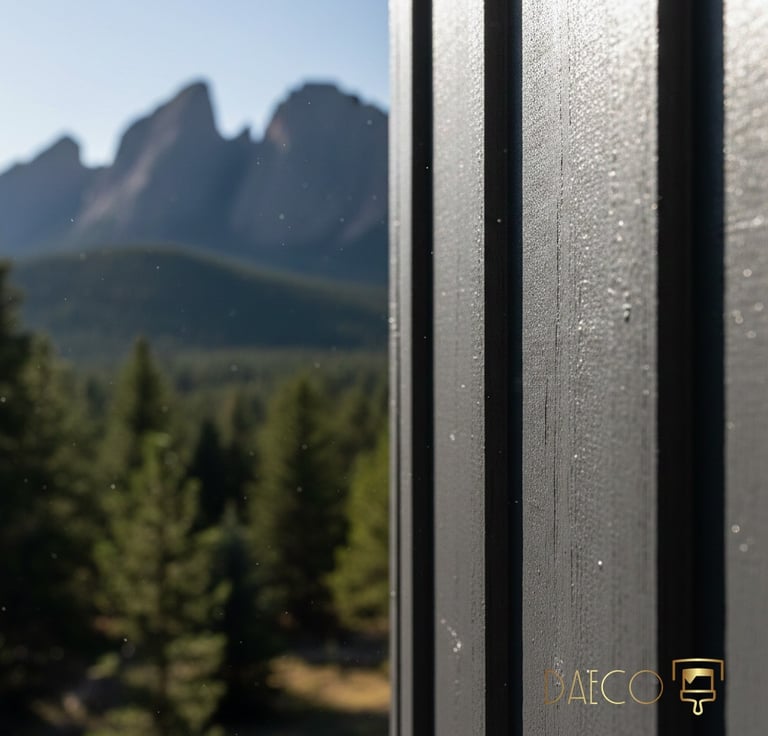
Why Most Exterior Paint Jobs In Boulder County Fail in 3–5 Years
Boulder's 5,430-foot elevation creates atmospheric conditions that destroy standard exterior coatings within 3–5 years. In neighborhoods like Mapleton Hill (80302) and Chautauqua, luxury residential painting Boulder requires more than contractor-grade materials—homes face UV-B radiation 25% more intense than sea level, combined with 40°F daily temperature swings that fracture poorly engineered paint systems. Since 2003, DAECO Painting has specialized in high-altitude residential coatings that function as engineered protection systems—not decorative applications that fail prematurely.
The High-Altitude Coating Failure Mechanism
UV Photodegradation
At Boulder's elevation, increased UV-B radiation breaks polymer chains in paint binder. Low-quality latex formulations lose elasticity within 18 months, causing surface chalking—the white powder you see when running your hand across faded siding. High-solids acrylic resins maintain molecular integrity under sustained UV exposure, preventing the premature degradation that turns a fresh paint job into a weathered surface before the warranty expires.
In high-altitude environments, coating failure begins at the molecular level long before it becomes visually obvious.
Thermal Cycling Stress
Boulder experiences diurnal temperature swings from 35°F at dawn to 75°F by afternoon during spring and fall. Substrate materials—wood, fiber cement, stucco—expand and contract at different rates than coating film. Rigid paints crack along grain lines and seams, creating entry points for moisture infiltration. Elastic coating chemistry, measured by elongation percentage, allows the film to move with substrate expansion without rupturing adhesion bonds.
Moisture Vapor Dynamics
Rapid temperature changes drive moisture from inside wall cavities toward exterior surfaces. Non-breathable coatings trap this vapor, causing blistering and delamination that homeowners mistake for "bad paint" when the real culprit is system design. Vapor-permeable systems—measured in perms—allow moisture escape while blocking liquid water intrusion, critical for Boulder's monsoon season followed by immediate temperature drops that would otherwise trap moisture behind impermeable films.
Common Misconception in Boulder: "Premium Paint Alone Ensures Longevity"
Many homeowners believe purchasing designer-branded paint from retail stores guarantees performance. This ignores a fundamental truth: substrate preparation and system compatibility determine lifespan, not brand marketing.
A $75/gallon paint applied over inadequately sanded wood will fail faster than a $45/gallon contractor-grade coating properly integrated into a tested system. Mechanical bond failure, moisture-saturated substrates above 12% content, incompatible primer chemistry that allows tannin bleed—these substrate issues overwhelm even the most expensive topcoat formulations.
Most exterior paint failures in Boulder are adhesion failures, not product failures.
We prioritize substrate moisture testing, mechanical surface profiling, and primer-topcoat chemical compatibility over brand loyalty. The paint industry markets products; we engineer systems.
The Boulder-Specific Coating System
Step 1: Substrate Evaluation
We verify substrate moisture below 12% before any coating touches the surface. When readings hit 15–18%, we pause—allowing drying time or adjusting vapor barriers rather than painting over a ticking clock. Saturated substrates don't just risk failure; they guarantee it within two seasons.
Step 2: Mechanical Surface Preparation
HEPA-equipped orbital sanders remove oxidized coating and create the surface profile necessary for mechanical bond. Chemical adhesion alone fails under Boulder's thermal stress—the microscopic surface texture provides physical grip that withstands expansion and contraction cycles.
Step 3: Tannin and Stain Blocking
Cedar and redwood, common in Boulder architectural finishes, leach tannins through standard primers. High-build alkyd sealers stop this migration before it starts—preventing the brown streaking that appears six months into a failed paint job when homeowners realize retail primers weren't engineered for resinous wood species.
Step 4: Primer Selection
Acrylic primers on fiber cement and engineered wood; alkyd primers on old-growth dimensional lumber. Chemistry match between substrate, primer, and topcoat prevents delamination at interface layers—the invisible boundaries where most coating failures actually originate.
Step 5: High-Solids Topcoat Application
We use 100% acrylic latex with 35–45% solids content, providing the UV-blocking pigment density and elastic film properties Boulder's climate demands. Two coats minimum achieves proper dry film thickness (DFT)—inadequate DFT exposes primer to UV degradation, undermining the entire system within three years.
Dry film thickness—not color choice—is the single most controllable variable in coating longevity.
Where Boulder Homeowners Should Invest Budget
Maximum ROI: South and West Elevations
These faces receive 60–70% of total UV exposure. Investing in premium acrylic systems here prevents the exponential cost of substrate replacement from moisture damage—we're talking $15,000–$30,000 in rot repair versus $3,000–$5,000 in proper coating systems.
South- and west-facing elevations determine the lifespan of your entire exterior system.
High-Traffic Architectural Details
Window casings, fascia boards, and decorative trim experience maximum thermal movement. Elastic coating systems and enhanced surface preparation prevent the cracking that leads to water intrusion and rot. Once water penetrates wood substrate, you're no longer repainting—you're replacing structural components.
Strategic Economy: North Elevations
Reduced UV exposure allows slightly less expensive coating formulations without sacrificing performance. The budget saved here funds critical system integrity on high-stress surfaces. This isn't corner-cutting; it's intelligent resource allocation based on actual atmospheric exposure.
Climate-Driven Maintenance Intervals
Unlike Front Range cities at lower elevation, Boulder exterior coatings require inspection every 4–5 years rather than the 7–10 year intervals appropriate for Denver at 5,280 feet. Early intervention—addressing isolated caulk failure or minor cracking—prevents cascading moisture damage requiring full substrate replacement.
Signs requiring immediate attention:
Chalking visible on hands after surface contact
Caulk separation exceeding 1/8" at trim joints
Surface cracking in predictable grain patterns
Moisture stains on interior ceilings below exterior walls
These aren't cosmetic issues. They're early warning indicators that your coating system is failing and moisture is beginning substrate infiltration.
Frequently Asked Questions
Does Boulder's climate require different paint than Denver?
Yes. While Denver and Boulder sit at similar elevations, Boulder's foothill proximity, wind exposure, and microclimate variability create more aggressive coating stress in specific neighborhoods like Mapleton Hill and Chautauqua. Boulder requires higher-solids acrylic formulations with enhanced UV absorbers and greater film elasticity than what's adequate for lower-altitude applications. Denver-spec coatings will perform in Boulder—just not for as long.
What causes paint to fail faster on older Boulder homes?
Original wood substrates in pre-1980 construction contain natural oils that bleed through modern water-based primers. Without proper tannin-blocking sealers, brown staining appears within 6–12 months. Engineered lumber in newer construction lacks this issue but requires different primer chemistry for proper adhesion—one substrate type doesn't receive universal treatment.
The Technical Reality
Surface preparation and system selection—not paint brand—determine coating performance in Boulder's high-altitude environment. Since 2003, DAECO Painting has delivered engineered protection systems that respond to atmospheric stress through chemistry and mechanical design. Every Boulder exterior painting project receives substrate-specific preparation, moisture-verified application timing, and documented system architecture ensuring long-term performance.
For homeowners managing high-end homes in Boulder neighborhoods where climate accelerates coating degradation, choosing a painting contractor means selecting an architectural coatings engineer—not a color applicator.
Ready for a Project Assessment?
As you’ve seen, we consider every aspect of your home when determining the true cost of a professional paint project. We’d love to talk and provide a detailed, transparent proposal tailored to your home.