(303) 999-8864

Denver Painting Contractor Red Flags (2026 Guide)
Learn the top Denver painting contractor red flags homeowners should know before hiring. Avoid costly mistakes with this 2026 guide for Denver and Boulder homes.
DAECO Painting Company | Denver Painting Experts Since 2003
3/25/20269 min read
Home > Resources > Hiring Guide > Contractor Red Flags — Denver-Boulder
1. Why Homeowners in Denver and Boulder Get Burned
Hiring the wrong painter in Denver's Cherry Creek, Wash Park, or Boulder's Mapleton Hill neighborhood can cost you $8,000–$20,000+ in premature failure and rework. Knowing the red flags before you sign protects both your investment and your home.
In neighborhoods like Cherry Creek (80206), Washington Park (80210), and Boulder's North End (80302), high-end residential repainting projects are a significant investment—often ranging from $12,000 to $40,000 for a full exterior. DAECO Painting has served Denver luxury homeowners since 2003, and in that time, we have seen a consistent pattern: the most costly mistakes trace back to the hiring decision, not the paint.
Colorado's Front Range environment—with its altitude-driven UV intensity, rapid freeze-thaw cycles, and dramatic humidity swings from arid to monsoon—places outsized stress on exterior coatings. A paint job applied over unprepped surfaces or with thinned-out paint fails in as little as 18 months here. A properly executed job, using the right coating systems and surface preparation, will last 8–12 years. The difference almost always starts with who you hire.
2. The DAECO Climate Protocol: Why Denver–Boulder Demands More
Colorado's altitude (5,280–5,430 ft in Denver; 5,430 ft in Boulder) creates paint-performance conditions that simply do not exist at sea level. Any contractor who does not factor in UV intensity, altitude off-gassing behavior, and freeze-thaw cycles is not qualified to work on Front Range homes.
Understanding Colorado's climate physics helps you evaluate contractor claims before a single brush stroke touches your walls:
UV Intensity: At 5,280+ feet, UV radiation is approximately 25% more intense than at sea level. This accelerates paint oxidation and chalking, especially on south- and west-facing exposures. Premium exterior coatings with UV-stabilized resins are not optional—they are necessary.
Altitude Off-Gassing: Paint solvents and water-based formulas off-gas and dry differently at altitude. Applying coatings outside of the recommended temperature window (typically 50°F–85°F) in Colorado's rapidly shifting spring and fall weather causes adhesion failure.
Freeze-Thaw Cycles: Denver averages 170+ days of freeze-thaw cycling annually. Substrates absorb and release moisture, creating micro-movement that cracks brittle or poorly bonded paint films. Proper caulking and priming are not finishing steps—they are structural ones.
Humidity Swings: Relative humidity in the Denver-Boulder corridor swings from under 10% in winter to 70%+ during summer monsoon. Paint applied during humidity extremes does not cure correctly.
Pro Tip — We have found that contractors who win bids by skipping primer almost always do so to cut time, not cost. At altitude, primer is what binds the system—removing it is the single fastest way to guarantee early failure.
3. How to Screen a Denver Painting Contractor: A 6-Step Process
A legitimate painting contractor serving Denver or Boulder luxury homes should clear every one of these six screening steps without hesitation. Resistance or vagueness at any stage is actionable data.
Step 1 — Request the Documentation Package
Before any conversation about color or budget, ask for: (a) Colorado contractor license number, (b) certificate of general liability insurance naming you as additional insured, and (c) active workers' compensation coverage. A reputable contractor provides this within 24 hours. Delay, deflection, or a verbal "we're fully covered" is the single most reliable red flag in the industry.
Pro Tip — Call the insurance carrier directly to verify the policy is active and that coverage limits are adequate for your project value.
Step 2 — Evaluate the Written Estimate
A professional estimate for a luxury Denver or Boulder home is never a single-page total. It should itemize: the specific paint brand and product line (e.g., Sherwin-Williams Emerald, Benjamin Moore Aura, or Farrow & Ball for interiors), the number of coats per surface type, the full prep scope (power washing, scraping, sanding, caulking, priming), and the project timeline. A vague estimate is a preview of a vague job.
Pro Tip — If the estimate says "premium paint" without naming the brand and product line, treat it as a placeholder for substitution. Get the exact product in writing and in the contract.
Step 3 — Confirm Crew Continuity
A common pattern in low-bid operations: a polished sales representative closes the deal, and an unknown subcontracted crew shows up on day one. Ask directly: "Who will be doing the work, and are they your employees or subcontractors?" Undisclosed subcontracting is not automatically disqualifying, but the crew's insurance and qualifications should be verifiable and disclosed before you sign.
Pro Tip — Request that the crew foreman or lead painter is introduced before the project starts. High-end residential painting requires consistent personnel—not rotating labor.
Step 4 — Review the Prep Protocol
Surface preparation is where paint jobs are won or lost. Ask the contractor to walk you through their prep process step by step. It should include: pressure washing (appropriate PSI for substrate type), hand scraping and sanding of failed or peeling areas, spot priming of bare wood or patched surfaces, full prime coat on previously unpainted or drastic color-change surfaces, and caulking of all penetrations, joints, and gaps. Any contractor who says "the surface is in good shape, we'll just clean and paint" without walking the property first is guessing—and cutting.
Pro Tip — We have found that at least 40% of the total project time on a properly executed exterior repaint in Denver is prep work. If a bid seems fast on paper, it's almost always because prep has been reduced.
Step 5 — Check the Reference Trail
Ask for three recent references—specifically, homeowners with comparable project types and finishes in the Denver-Boulder corridor. Request job addresses you can physically drive by. A legitimate contractor is proud of their visible work and eager to connect you with satisfied clients. Reluctance, outdated references, or references that can't be reached are consistent red flags.
Pro Tip — When calling references, ask specifically: Did the crew show up consistently? Was the prep work thorough? Did the final result match the written estimate? Was there a final walkthrough?
Step 6 — Review the Contract Before Signing
Never proceed on verbal assurances. The contract should specify: full scope of work, paint products and quantities, project timeline with start and estimated completion dates, payment schedule tied to project milestones (not calendar dates), and a written workmanship warranty. A reputable contractor offering warranty coverage in Denver or Boulder will typically provide 3–5 years on labor for a properly executed job.
Pro Tip — If a contractor resists putting warranty terms in writing, that is your answer about how confident they are in their own work.
4. The Cost of Ignoring Red Flags: Cause and Effect
Every red flag has a downstream consequence. Understanding the cause-and-effect chain helps homeowners assign proper weight to early warning signs.
Here is how the most common contractor failures translate to real-world outcomes on Denver and Boulder homes:
Skipped prep work → Paint adhesion failure within 18–36 months, particularly on south-facing wood and trim. Re-prep and repaint cost: 100–120% of the original project.
Thinned or substituted paint → Reduced film build, compromised UV resistance, and early fading on Colorado's high-altitude sun exposures. Discovery often occurs in year two when the surface begins to chalk or oxidize prematurely.
No caulking → Moisture infiltration behind substrates accelerates wood rot and drywall damage. On a Boulder foothills home, this can represent $5,000–$15,000 in structural repairs unrelated to the paint itself.
Insufficient coats → Uneven film thickness creates visible lap marks, holidays (missed spots), and uneven sheen. On a designer-specified interior, this requires full recoat to correct.
No written warranty → No recourse. The contractor is under no legal obligation to return, and the homeowner absorbs the full cost of rework.
5. The Denver–Boulder Misconception: "One Coat Is Fine If the Surface Is Clean"
This is the most widely repeated oversimplification in the local market—and it is wrong in almost every scenario involving a color change, repaint over aged coatings, or bare substrate exposure.
We hear this from homeowners who have been told by lower-bid contractors that a single coat of high-quality paint is sufficient. On a new, properly primed, same-color repaint in controlled conditions, one coat can be acceptable. In practice on Denver and Boulder luxury homes, this scenario represents a minority of projects.
Most residential repaints involve at least one of the following conditions that require a second coat: a color change (especially from dark to light or vice versa), any patched or repaired areas, bare wood exposed by scraping or sanding, surfaces with tannin bleed or staining, and any surface that has been power-washed and revealed substrate variation. At DAECO, our standard on high-end residential projects is two finish coats over a spot or full prime—because we have found that single-coat applications in Colorado's UV environment do not deliver the depth, uniformity, or longevity that our clients expect.
6. Red Flag vs. Green Light: The Denver Homeowner's Screening Table
Use this table as a quick reference when evaluating painting contractors for your Denver or Boulder home. A legitimate contractor clears every green-light standard without being asked twice.
7. Technical Insight: What High-End Denver Clients Realize Too Late
Luxury residential painting in Denver and Boulder is not a commodity service. The coating system, surface preparation protocol, and crew skill level determine the lifespan of your investment. Price is rarely the most important variable.
On a $2.5M Washington Park home or a $4M Boulder foothills property, the painting budget is typically 0.5–1.5% of the home's value. At that ratio, the risk of hiring an underqualified contractor to save $2,000 on a $15,000 project is asymmetric—the cost of rework frequently exceeds the original job. This is the realization that most high-end clients arrive at after, not before, a failed paint job.
The technical factors that distinguish a premium painting contractor from a commodity operator in the Denver-Boulder market include: coating system selection matched to substrate type and climate exposure, primer specification for the specific condition (shellac-based for tannin bleed, high-build for raw wood, bonding primer for previously painted glossy surfaces), micro-climate awareness for timing application (morning vs. afternoon on west-facing exposures, temperature windows in spring and fall), and spraying, backrolling, and brush technique appropriate to the surface and product.
These are not upsells. They are the baseline of professional practice at altitude.
8. Frequently Asked Questions — Denver-Boulder Homeowners
Direct answers to the four highest-intent questions Denver and Boulder homeowners ask when hiring a painting contractor. Each answer is designed to be actionable and verifiable before you sign.
Q: What is the biggest red flag when hiring a painting contractor in Denver?
A: The single most critical red flag is the absence of verifiable liability insurance and workers' compensation coverage. Without both, a Denver homeowner assumes full financial liability for any property damage or crew injury on their site. Request the certificate of insurance before any other conversation, verify it directly with the carrier, and decline any contractor who cannot provide documentation within 24 hours.
Q: How do I know if a Denver painting contractor's estimate is legitimate?
A: A legitimate estimate for a Denver or Boulder luxury residential painting project will specify the exact paint brand and product line, the number of coats per surface type, a detailed prep scope (washing, scraping, sanding, caulking, priming), and a written timeline. Any estimate that lists only a total price without this breakdown should be treated as incomplete. Request full itemization in writing before proceeding, and include all product specifications in the signed contract.
Q: How much of an upfront deposit is normal for a Denver painting contractor?
A: A standard deposit from a reputable Denver or Boulder painting contractor is 10-25% of the total project cost, intended to cover initial material purchases. Any request for 50% or more before work begins is a significant red flag. Legitimate contractors structure payments in milestones tied to project progress, not lump-sum payments collected upfront. Full payment before work starts removes all leverage over quality and completion.
Q: Why does prep work matter so much for exterior painting in Denver and Boulder?
A: Colorado's Front Range climate, with its high-altitude UV intensity, 170+ annual freeze-thaw cycles, and dramatic humidity swings, places extreme stress on paint films. Prep work (washing, scraping, sanding, caulking, and priming) is what allows the coating to bond properly to the substrate and flex with seasonal movement. Skipping or minimizing prep is the primary cause of premature paint failure in Denver and Boulder, typically producing peeling and adhesion loss within 18-36 months instead of the expected 8-12 year lifespan.
9. Related Resources from DAECO Painting
These resources extend the hiring guide and reinforce DAECO's full-service authority across the Denver-Boulder luxury residential painting market.
For homeowners evaluating exterior coating systems suited to Colorado's Front Range climate, see our guide: How to Choose the Right Exterior Paint for Denver's Altitude and UV Conditions — a detailed breakdown of coating system selection, product comparisons, and climate-specific application protocols used by DAECO on luxury homes across Cherry Creek, Hilltop, and Boulder's Table Mesa neighborhoods.
For clients planning interior projects with designer-specified finishes, see: The Denver Homeowner's Interior Painting Process — a step-by-step overview of how DAECO coordinates with interior designers, architects, and general contractors on high-end residential repaints across Denver's most distinctive homes.
10. Why DAECO Painting Is Denver and Boulder's Trusted Authority
DAECO Painting has served Denver luxury homeowners since 2003—more than two decades of interior and exterior painting at altitude, across every substrate type and finish specification the Front Range demands. We operate with full general liability and workers' compensation coverage, employ our own trained crews, and have never offered a project without a written, itemized estimate and workmanship warranty.
Our clients in Cherry Creek (80206), Wash Park (80210), Hilltop (80220), Boulder's Mapleton Hill (80304), and the Table Mesa neighborhood (80305) choose DAECO not because we are the lowest bid—but because they understand the cost of getting this wrong. If you are evaluating painting contractors for your Denver or Boulder home, we welcome the scrutiny. Every green-light standard in this guide is how we operate.
DAECO Painting | Interior & Exterior Painting Contractor | Denver–Boulder, Colorado | Since 2003
Service Area: Cherry Creek · Wash Park · Hilltop · Congress Park · Boulder · Louisville · Lafayette
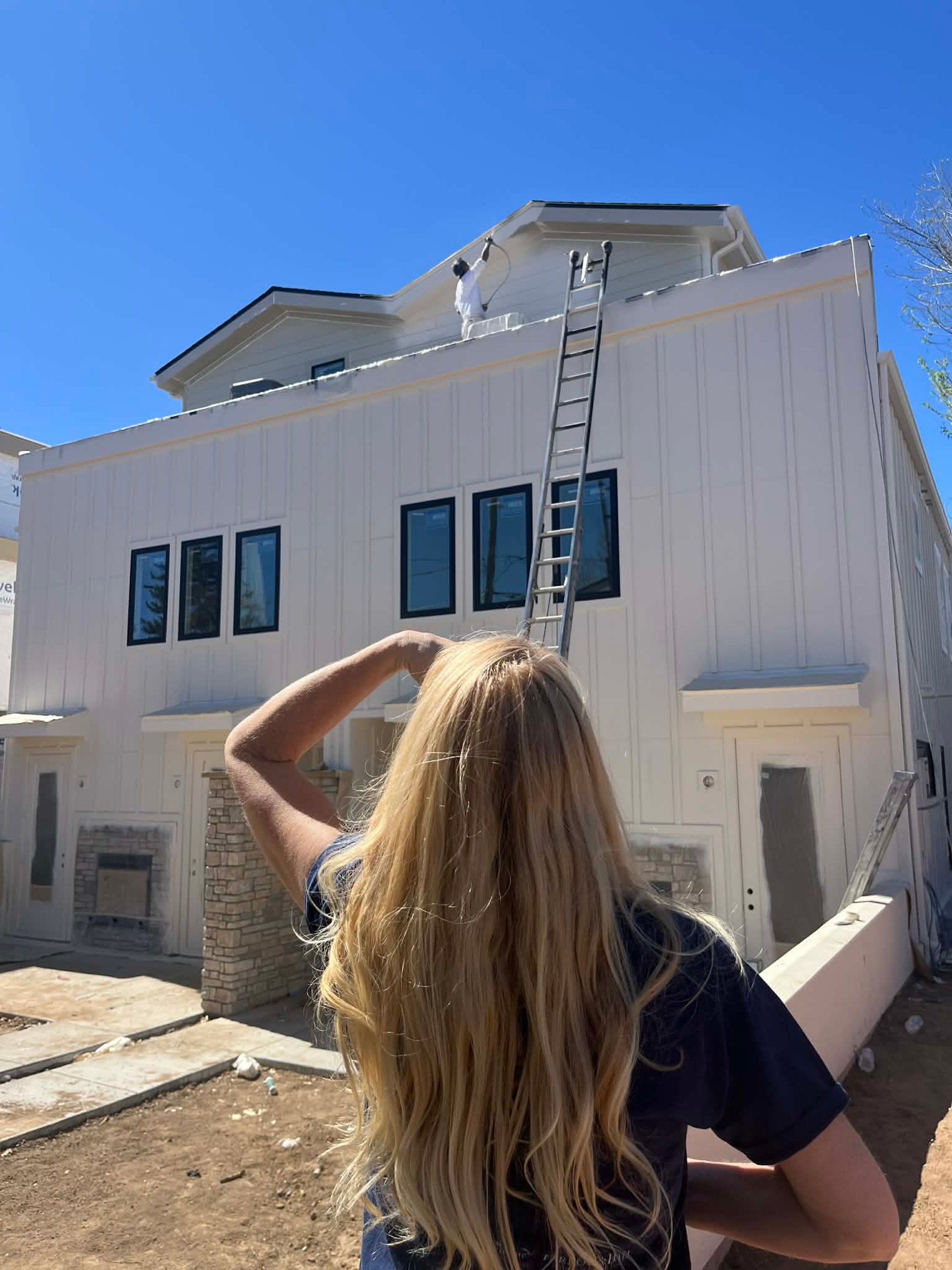
Ready for Your Custom Quote?
As we hope you've learned, we take every aspect of your house into account when determining the cost of painting your home. Get in touch with us so we can provide you a detailed cost for painting your home.