(303) 999-8864

Denver Trim Painting: Enamel vs Waterborne
Discover how DAECO uses Level 5 prep and waterborne urethane to outperform traditional enamel in Denver trim painting, preserving durability, color, and finish quality.
NEED TO KNOWHOME IMPROVEMENTLOCAL SERVICES
DAECO PAINTING
1/15/20262 min read
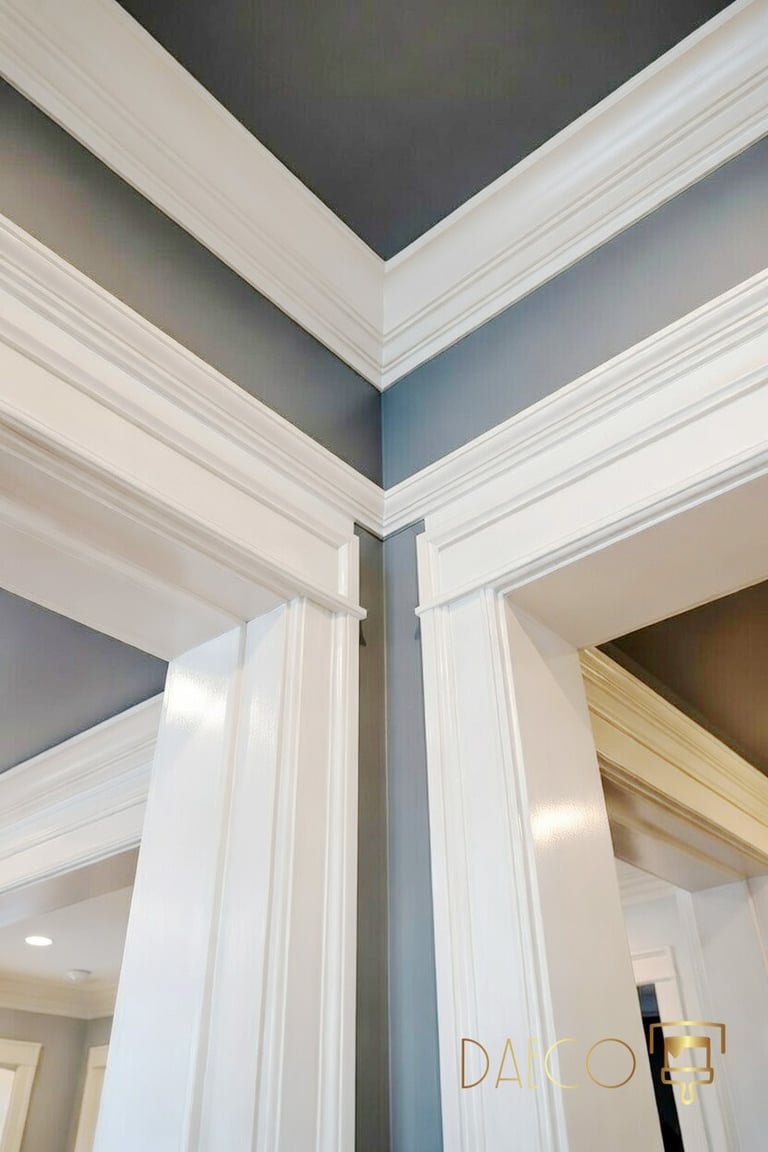
For Denver and Boulder homeowners, professional interior trim and millwork painting is more than choosing “enamel” or “latex.” DAECO Painting, as a leading residential painter in Denver, relies on Level 5 prep and waterborne acrylic urethane coatings to manage high-altitude curing, preserve color integrity under intense UV, and deliver a flawless, long-lasting finish on all visible woodwork.
Why the Old Enamel vs Latex Debate Fails
Generic advice frames trim painting as a simple “enamel vs latex” choice. In reality, resin chemistry, substrate preparation, and local environmental factors dominate long-term performance.
Modern architectural finishes include:
Standard acrylic latex: For walls or low-contact surfaces
Hybrid alkyd-acrylic enamel: Moderate hardness, situational use
Waterborne acrylic urethane: Premium architectural trim finishes
In Denver, waterborne urethanes consistently outperform traditional enamel, delivering predictable durability, UV stability, and uniform sheen.
Three Technical Traps That Trip Up Most Painters in Denver
Trap #1: The Flexibility Fallacy
Competitor Pitch: “We use oil-base enamel for rock-hard scratch resistance.”
DAECO Solution: Colorado’s dry climate makes rigid oil films brittle; seasonal expansion/contraction causes micro-fractures. Waterborne acrylic urethanes maintain hardness while breathing with the wood, preventing flaking.
Trap #2: The Adhesion Illusion (Sanding Shortcut)
Competitor Pitch: “No-sand bonding primers are sufficient.”
DAECO Solution: Chemical primers degrade under high-altitude UV. Level 5 mechanical sanding creates a microscopic bond profile, ensuring coatings remain anchored for 10+ years.
Trap #3: The Sheen Stability Scam
Competitor Pitch: “Semi-gloss is standard for trim.”
DAECO Solution: Traditional enamels yellow and lose luster in Denver’s intense interior light. UV-stable aliphatic resins maintain satin and gloss finishes for years, preserving aesthetic integrity.
Level 5 Prep — The Key Determinant
Trim and millwork are highly visible; minor flaws are exaggerated by Denver sunlight and sightlines. DAECO prep includes:
Substrate identification (MDF, finger-jointed pine, historic fir)
Grain filling and defect correction
Progressive sanding between coats
Dust-controlled conditioning prior to each coat
Most painters stop at patching; DAECO goes full Level 5, producing flawless surfaces that reflect light evenly.
Denver-Specific Factors
Altitude & Cure Behavior
At 5,280 ft, paints flash faster but cure slower. DAECO adjusts sequencing, open time, and intercoat sanding to prevent dry spray or adhesion failures.
Light & Sheen Behavior
Denver’s intense daylight exaggerates:
Grain telegraphing
Lap marks
Sheen inconsistency
Proper sheen selection is technical, not stylistic, especially on visible trim.
Neighborhoods & Architecture
Wash Park / Park Hill (Craftsman homes): open-grain softwoods require flexible, flowing coatings
Cherry Creek / Boulder (Contemporary homes): MDF or factory-finished millwork demands smooth, uniform films
The same service category requires different execution standards for different Denver home types.
Micro Case Study — Capitol Hill Historic Trim
Problem: Softwood trim repainted twice in five years, showing grain, brush marks, and yellowing.
Failure Cause: Oil enamel applied over unfilled wood, no Level 5 prep.
DAECO Correction:
Remove failed coating
Grain filling & Level 5 surfacing
Waterborne acrylic urethane satin build
Outcome: Uniform finish, stable color, and long-term durability through seasonal cycles.
Advisory Close
If this feels overly technical, that’s intentional.
Interior trim failures in Denver rarely come from poor paint. They originate from skipped prep, incorrect resin selection, and ignoring altitude/UV effects.
A qualified interior house painter should explain why a system is chosen — not just what product is applied. That distinction determines long-term performance, aesthetic integrity, and protection of your investment.