(303) 999-8864

Farrow & Ball Down Pipe No. 26 in Denver's Historic Districts
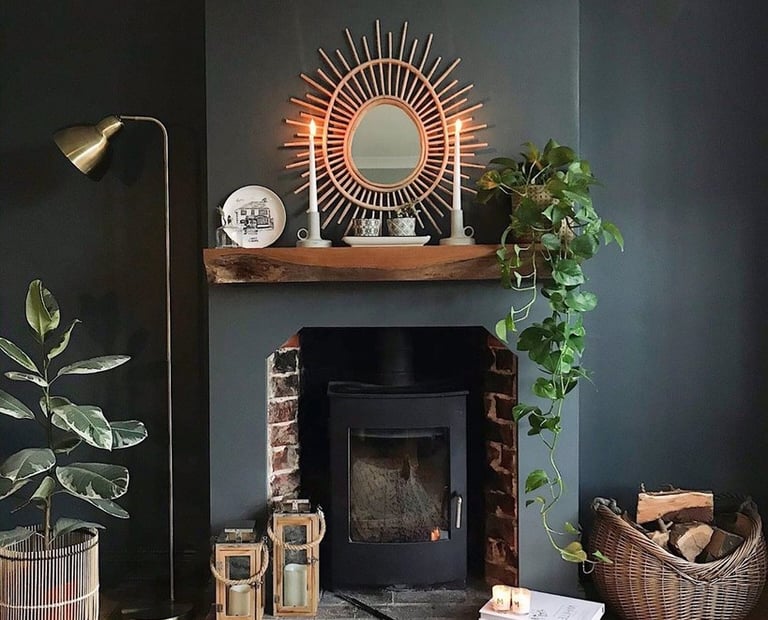
Expert application of Farrow & Ball Down Pipe No. 26 in Denver’s historic districts. DAECO Painting’s Level 5 finish ensures deep charcoal depth in Colorado sun.
2/20/20267 min read
The Charcoal That Earns Its Place | DAECO Painting
There is a particular quality of light in Denver — high, clear, and unforgiving — that exposes exactly what a color is made of. At 5,280 feet, there is no atmospheric haze to soften a poor paint choice. What you put on the wall is what you live with, in sharp focus, from morning through the long alpine afternoons. Certain colors that read as sophisticated in a magazine feel flat and unconvincing the moment Colorado sun finds them. And it's why, when a color does work here, it earns its place in a way that feels almost structural.
DAECO Painting, serving Denver since 2003, has applied this color across Potter-Highlands craftsmans, Denver Historical Homes, and Whittier row houses. Each time, the response from homeowners is the same: It looks like something we chose, not something we settled for.
What Down Pipe Actually Is — and Why That Distinction Matters
Down Pipe is not a gray. It is not a black. It is something more considered than either.
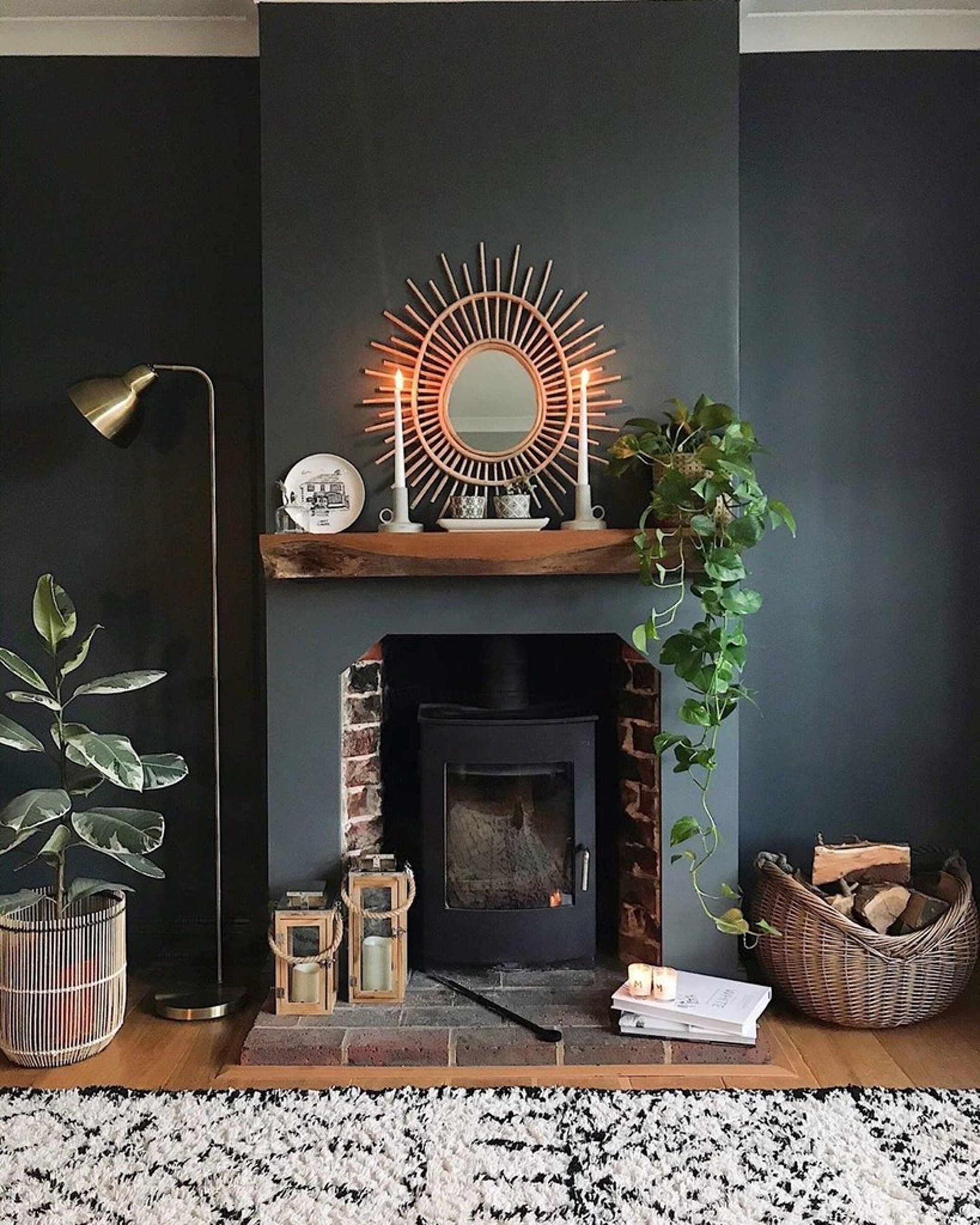
Farrow & Ball developed it from the Victorian tradition of painting functional building elements — gutters, downpipes, iron railings — in a dark, hardworking charcoal. What the formula captured was a color with distinct blue-green undertones riding beneath a deep charcoal base. That layering is what gives it character: depth without aggression, darkness without flatness.
Its Light Reflectance Value sits at approximately 5 — the threshold where a color stops reflecting light and begins absorbing it. A standard mid-gray reads around 35–40 LRV. At 5, Down Pipe is doing something categorically different. It is creating atmosphere, not reflecting it back.
For Denver interiors, this matters precisely. Colorado's high-altitude sun is direct and color-accurate in a way that mid-latitude light is not. Blue undertones that read subtly in a New York apartment read clearly here. In east-facing rooms, early morning sun pulls the blue-green toward refined slate. By afternoon, south-facing rooms deepen the color into something closer to cool, velvety charcoal-black. It is a color that moves through the day — and in Denver light, every movement is visible.
Paired alongside Pavilion Gray No. 242 — a cool mid-grey with its own subtle blue undertones — the two colors form a palette that feels resolved rather than assembled. Down Pipe anchors the atmosphere. Pavilion Gray provides architectural relief: trim, shelving reveals, door frames, secondary spaces that need definition without competition. Where Down Pipe says depth, Pavilion Gray says considered restraint.
What Designers on Both Sides of the Atlantic Understand About This Color
Interior designers across the United States and Europe have reached similar conclusions about Down Pipe, arriving from entirely different aesthetics.
London-based designers use it aggressively — color-drenched rooms where walls, trim, and ceiling share the same tone. The approach works because it eliminates the visual interruption of contrast. Room boundaries disappear. Small dining rooms become cocooned. Historic Georgian hallways feel like an arrival rather than a passageway.
American designers working in the luxury interior painting in Denver's historic neighborhoods of Potter-Highlands, Curtis Park, and Whittier tend toward a more architecturally specific application. Down Pipe on original millwork, kitchen cabinetry, or a study's four walls — contrasted against warm white oak floors or creamy trim like Farrow & Ball's Strong White — produces a room that feels designed in the precise, careful sense of that word. Not decorated. Designed.
Charleston-based designer Cortney Bishop has described it as the most classic old-world gray she's encountered — noting both the richness and the warmth that prevents it from reading as simply dark. That warmth comes from those blue-green undertones, which keep the color from going cold or industrial even in rooms with northern or limited light.
The consistent conclusion from both traditions: Down Pipe is not an accent. It is a commitment.
In a 1924 Potter-Highlands craftsman, DAECO applied Down Pipe to original built-in bookcases and a coffered dining room ceiling, leaving the walls in Pavilion Gray No. 242. Paired with warm white oak flooring and aged brass hardware, the result felt tailored rather than dramatic. The built-ins — which had read as clunky and brown under the previous paint — suddenly read as architectural. The homeowner's response was direct: "It looks like they were always supposed to be that color."
That is the correct outcome. The color clarified what the architecture already intended.
A Common Misconception About Dark Paint in Denver's Historic Districts
"Darker colors always fade faster in Colorado sun."
This is understandable logic — more pigment absorbs more UV energy, which should accelerate breakdown. In practice, fade resistance depends far more on the coating system than on the color itself.
High-solids coatings with UV-stable pigment bases hold deep colors with significantly greater durability than commodity paints, regardless of shade depth. The risk for homeowners choosing Down Pipe — or any saturated dark color at altitude — is not the color. The color doesn't fail. An underspecified system does.
For interior applications, finish selection is equally consequential. Down Pipe in a dead flat reads with that characteristic chalky depth that photographs clearly and absorbs imperfections. In high-traffic or moisture-exposed spaces — a kitchen, a powder room, a butler's pantry — a low-luster finish protects the investment without compromising the color's presence. For Colorado's exterior exposure specifically, DAECO's high-altitude exterior coating systems account for freeze-thaw cycling, direct UV load, and the thermal expansion that low-LRV colors experience on south- and west-facing elevations. The color does not change. The system's performance does.
DAECO's Process — The System Behind the Finish
The color is the decision. The application is what the color becomes.
Down Pipe's low LRV means preparation shows through every flaw. Patching ridges, sanding marks, inconsistent primer absorption — each variation catches light differently and reads as texture. For a color at this depth, working over an imperfect substrate is not a shortcut. It is a guarantee of a result that fails slowly and visibly.
Substrate Assessment. Every surface is evaluated for adhesion, porosity, and structural integrity before finish work begins. For deep, low-LRV colors like Down Pipe, this step determines the outcome of every step that follows.
180–220 Grit Profiling. Surfaces are profiled using Festool HEPA dustless sanding systems. The grit range creates the mechanical tooth required for strong adhesion without leaving scratches that telegraph through finish coats.
Level 5 Finish. In historic Denver homes with decades of paint accumulation — plaster walls, coffered ceilings, original millwork — DAECO applies a full skim coat to achieve a Level 5 drywall finish: the highest classification in the industry. Zero imperfection. No texture variation. Complete uniformity under raking light. At Down Pipe's LRV, this is not an upgrade. It is the baseline for a result worth having.
Primer Specification. High-build primers are selected by substrate, not by convenience. Drywall, original plaster, and bare wood each absorb differently and each require a primer formulated for those characteristics.
Airless Atomization. Finish coats are applied via airless spray where accessible, producing a factory-grade, brush-mark-free surface. Detail work is done by hand with tools and technique that leave no visible stroke.
Coating Selection. High-solids coatings in the specified sheen — matched to the room's function and lighting conditions — complete the system. Not the nearest available option. The specified product.
The result: a finish that looks like the color was always there — not applied, but uncovered.
Technical Specifications
Frequently Asked Questions
Is Farrow & Ball worth it for luxury interiors in Denver's historic districts? For a color like Down Pipe — where undertone precision, pigment density, and formula consistency determine how the color reads in your specific light conditions — yes. The cost difference between a premium formula and a color-matched alternative matters less than the result on the wall. For deep, saturated colors, formula inconsistency reads. The finished surface does not forgive it.
How does LRV affect a dark color's behavior in Colorado homes? LRV measures light reflectance. Down Pipe at LRV ~5 absorbs the majority of light reaching it, creating visual warmth rather than radiating it. For interior applications, this means surfaces at this depth feel warmer than they are — the color holds light rather than throwing it back. For exterior use in Colorado, low-LRV coatings experience greater thermal cycling, which is why coating flexibility, adhesion specs, and freeze-thaw durability matter specifically in this climate.
What finish is right for Down Pipe in a Denver kitchen or butler's pantry? Dead flat delivers the richest visual depth but has limited washability. For cabinetry and high-contact surfaces, Full Gloss reads as a deliberate European finish — lacquer-like, architectural — while offering the durability the space requires. Estate Eggshell is the practical choice for walls in kitchen-adjacent rooms where both appearance and cleanability matter.
Why do colors look different in Denver than in other cities? At altitude, solar radiation is measurably more intense — approximately 25% more UV exposure than at sea level — and the light is cleaner and more color-accurate. Undertones that are muted by haze or atmospheric softness at lower elevations read clearly here. A color that passes as simple charcoal in Chicago or Seattle reveals its full blue-green complexity in Denver's direct light. For a color as undertone-dependent as Down Pipe, that is not a complication. It is precisely why it performs so well in this environment.
"Luxury Interior Painting in Denver's Historic Neighborhoods" — This anchor ties Down Pipe's color narrative directly to DAECO's project work in Potter-Highlands, Curtis Park, Whittier, and Five Points, reinforcing geographic authority and category relevance for high-end interior coating in Denver's most architecturally significant residential districts.
"High-Altitude Exterior Coating Systems for Colorado Homes" — This anchor connects the coating science established in this piece — UV stability, freeze-thaw durability, substrate preparation — to DAECO's exterior expertise, strengthening topical depth across the service cluster.
DAECO Painting has served Denver's residential market since 2003. For color consultations, project specifications, or substrate assessments in Denver's historic districts, contact DAECO directly. No deposit is required to begin — we earn the work before we invoice for it.
Ready for Your Custom Quote?
As we hope you've learned, we take every aspect of your house into account when determining the cost of painting your home. Get in touch with us so we can provide you a detailed cost for painting your home.