(303) 999-8864

Interior Painters Denver: Expert Precision vs. Standard
Hiring Interior Painters Denver? Discover the technical difference between expert film engineering and standard production painting to save on your next project.
DAECO PAINTING
1/31/20269 min read
What Denver Homeowners Need to Know Before Hiring.
When searching for painting contractors in Denver, Boulder, or surrounding Front Range communities, you'll find dozens of companies claiming "professional" results. But not all professional painters deliver the same quality. Understanding the measurable difference between standard production painting and expert-level craftsmanship can save Denver homeowners thousands in premature repaints and prevent buyer's remorse on high-visibility projects like kitchen cabinets, interior trim, and exterior millwork.
DAECO Painting has served Denver and Boulder County since 2002, specializing in precision finishes that combine coating science, surface preparation engineering, and application discipline. This guide breaks down the specific technical differences between standard professional painting and expert-level work—not marketing claims, but observable finish characteristics you can inspect before final payment.
The Real Difference: Coverage vs. Film Engineering
Standard professional painters focus on coverage—getting paint onto surfaces efficiently. Expert painters engineer the coating film itself, controlling thickness uniformity, surface flow characteristics, and light reflection behavior. This fundamental distinction drives every downstream difference in appearance, durability, and long-term performance.
Standard Professional Painting: Production-Grade Execution
Most licensed painting contractors in the Denver metro deliver what the industry calls "production-grade" work. This approach prioritizes speed and acceptable coverage over precision coating application.
Observable Finish Characteristics:
Edge buildup along trim profiles, panel grooves, and architectural details creates visible "picture framing" where paint accumulates heavier on edges than flat surfaces.
Roller stipple telegraphs through the dried coating, particularly noticeable on smooth walls and ceiling surfaces. Standard technique often leaves micro-texture patterns from roller nap that trap dirt and complicate future recoating.
Caulk lines remain visible rather than disappearing into the finish. When caulking isn't properly tooled and surrounding edges aren't conditioned before painting, the texture difference between caulk and substrate shows through the topcoat.
Bead lines and zippering along panel grooves appear as tiny dots of accumulated paint creating a "zipper" effect along vertical edges.
Lap marks appear as subtle bands where wet edges dried before being overlapped.
Inconsistent sheen develops from uneven film build. Areas with heavier paint loading appear glossier than sections with thinner coverage.
Notice the visible edge buildup along the door trim where it meets the wall—paint has accumulated heavier on the trim edge, creating a subtle ridge visible even in the photo. The wall surface also shows pronounced roller stipple texture that telegraphs through the dried film. This combination of edge accumulation and uneven film thickness is the signature of production-speed application without load control or back-rolling. In Denver's high-altitude sun, raking light across this surface reveals every texture irregularity.
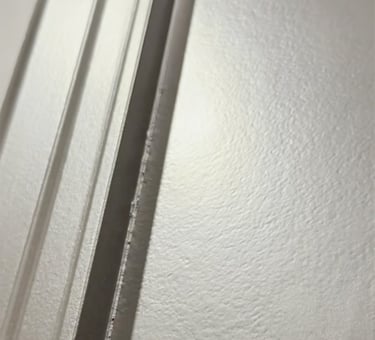
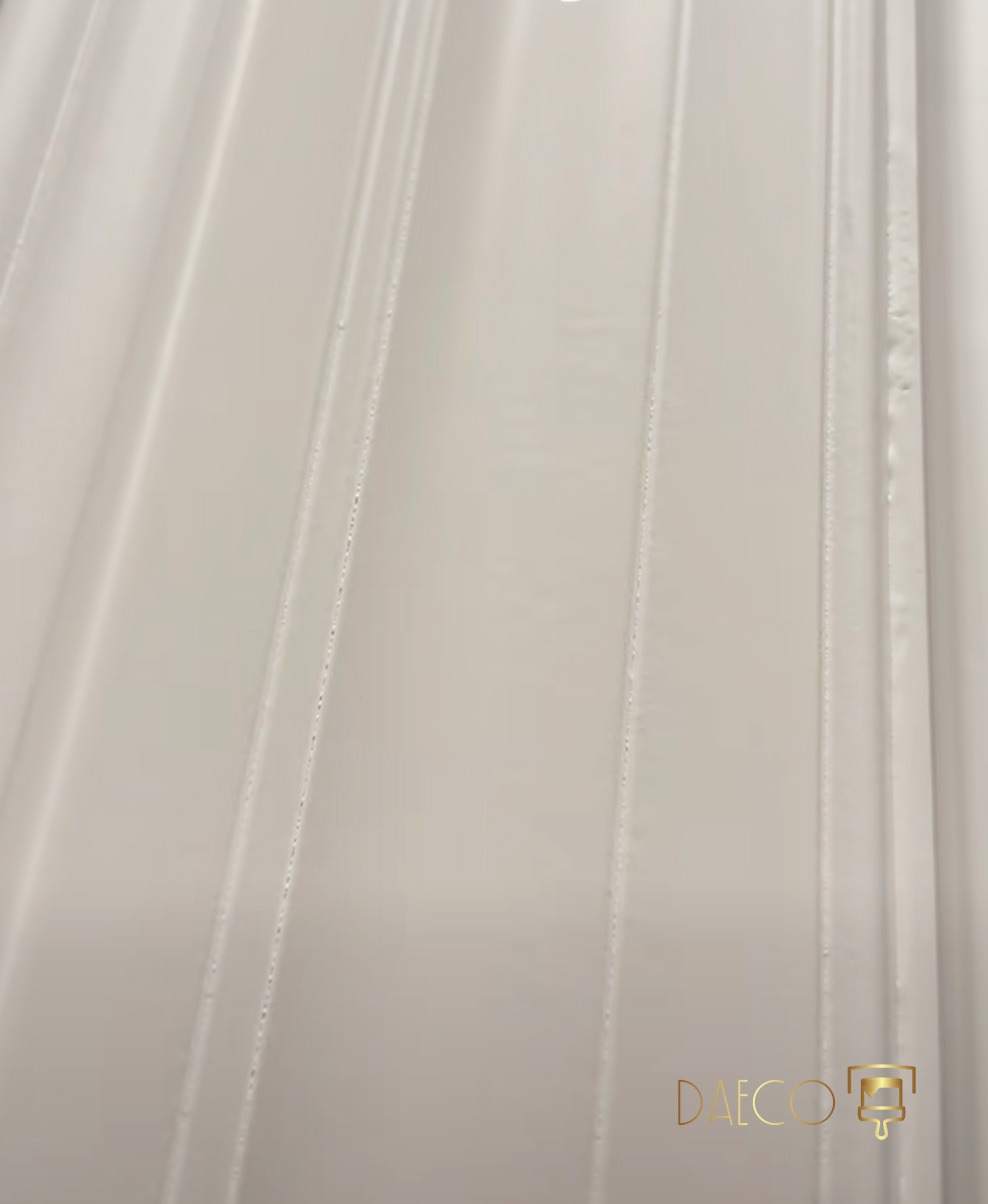
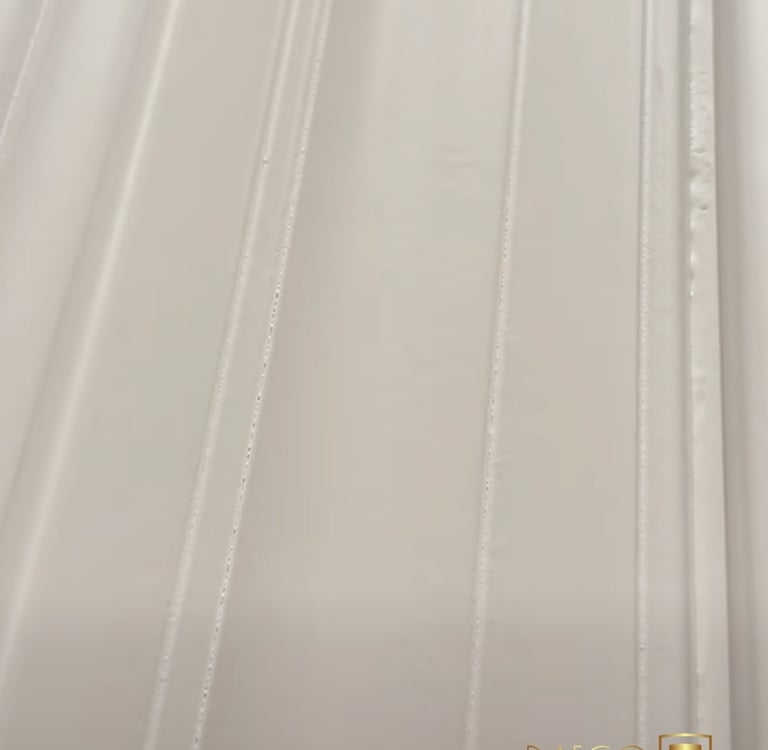
This vertical panel door shows classic "bead lines" or "zippering" along the panel grooves—tiny dots of paint that have accumulated along the edges of each recess. Look closely at the vertical grooves and you'll see a stippled, zipper-like texture running the length of each panel edge. This happens when painters don't control brush loading or fail to back-brush panel edges to redistribute material evenly. Over time during Colorado's freeze-thaw cycles, these thick bead lines are the first areas to crack and delaminate.
Real-World Market Painters:
✅ Faster turnaround
✅ Lower upfront cost
✅ Practical choice for tight budgets, rental properties, house flips, or low-visibility areas
Real-World Cons:
❌ Edge build-up ("picture framing")
❌ Visible stipple and drag marks
❌ Bead lines emphasized instead of disappearing
❌ Light reflection reveals imperfections
❌ Shorter lifespan due to uneven mil thickness (4-6 years interior, 3-5 years exterior)
This is what happens when crews move fast, have no actual training, skip proper back-brushing, don’t balance roller load, and treat trim like wall work. It looks painted.
Expert-Level Painting: Precision Film Engineering
Expert painting execution treats coating application as an engineering discipline, not just skilled labor. Every step from surface preparation through final topcoat focuses on controlling variables that affect finished film properties.
Observable Finish Characteristics:
Uniform film thickness across all surfaces—edges, flats, inside corners, and outside corners maintain consistent mil build.
Architectural lines remain crisp and intentional. Panel grooves, trim reveals, and shadow lines don't accumulate paint beads or show zipper texture from brush drag.
Light reflects uniformly across surfaces without hot spots, dull patches, or sheen variation.
Caulked joints visually disappear. When substrate edges are properly conditioned and caulk is precisely tooled, the topcoat bridges these transitions without texture telegraphing.
The finish reads as manufactured rather than painted. Kitchen cabinets, interior doors, and trim work appear factory-applied, not hand-finished.
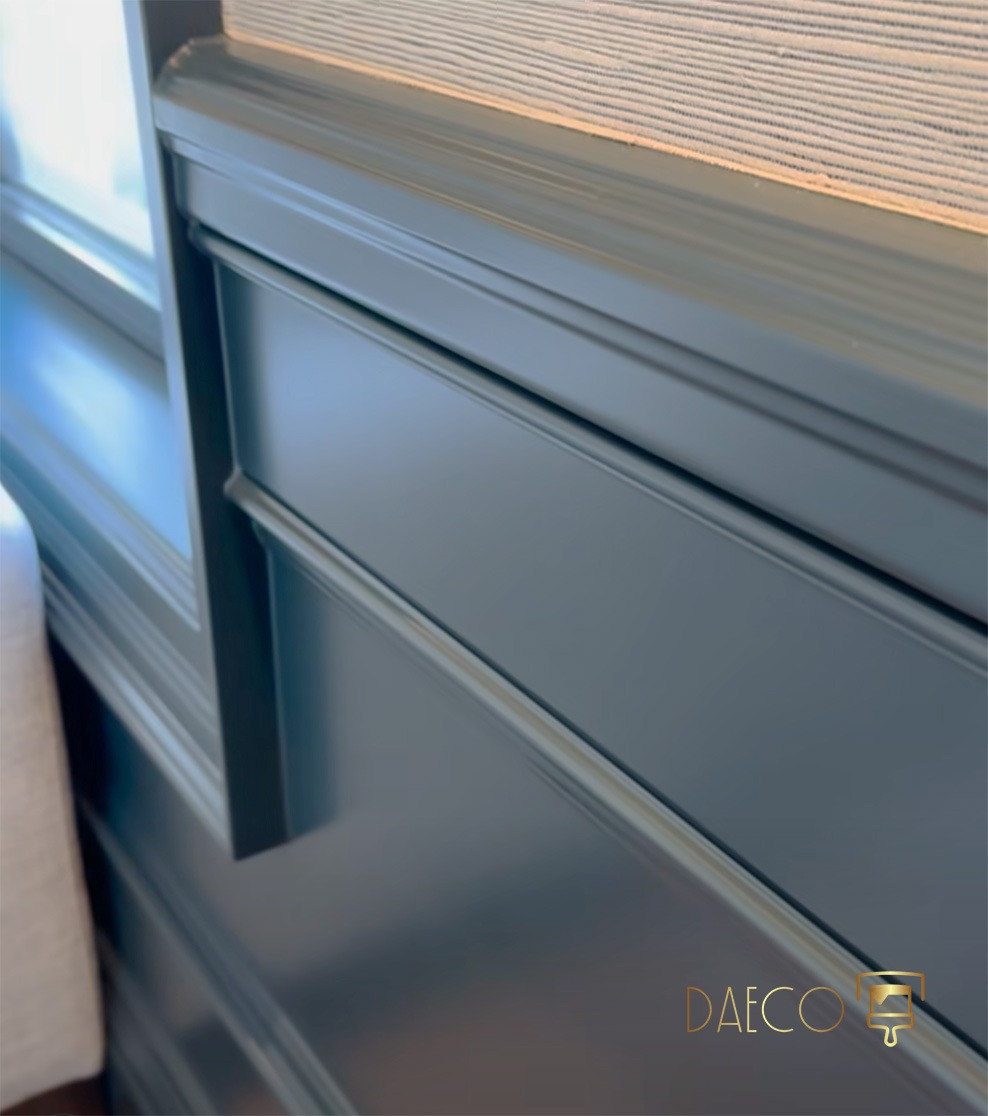
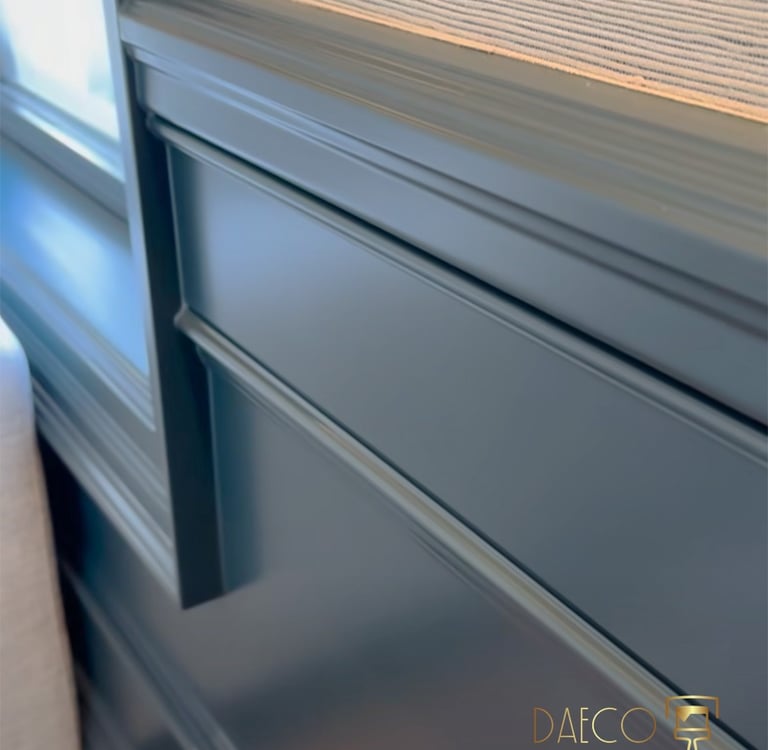
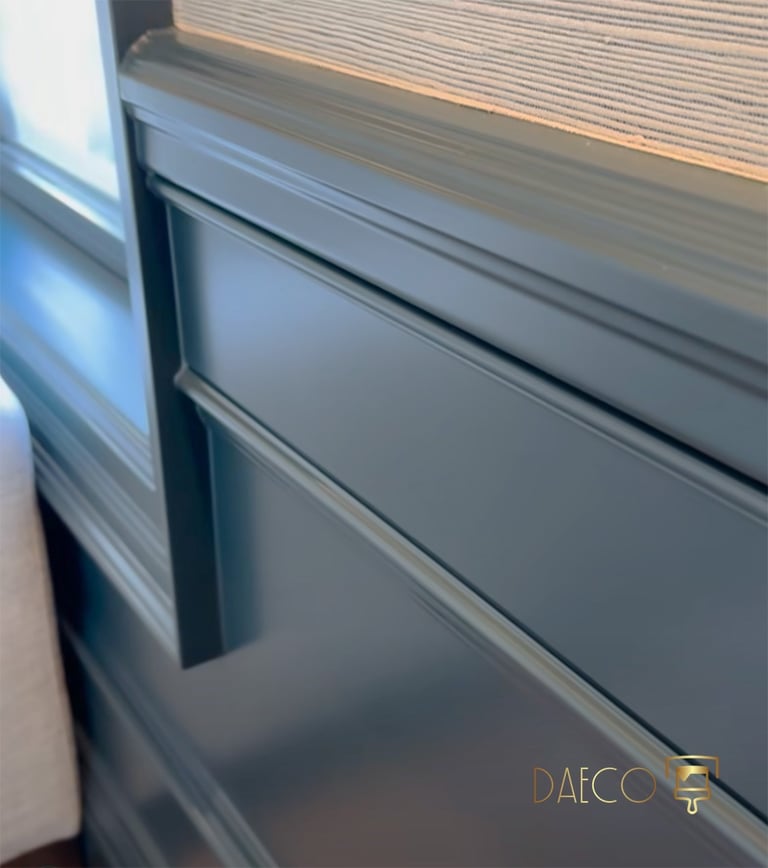
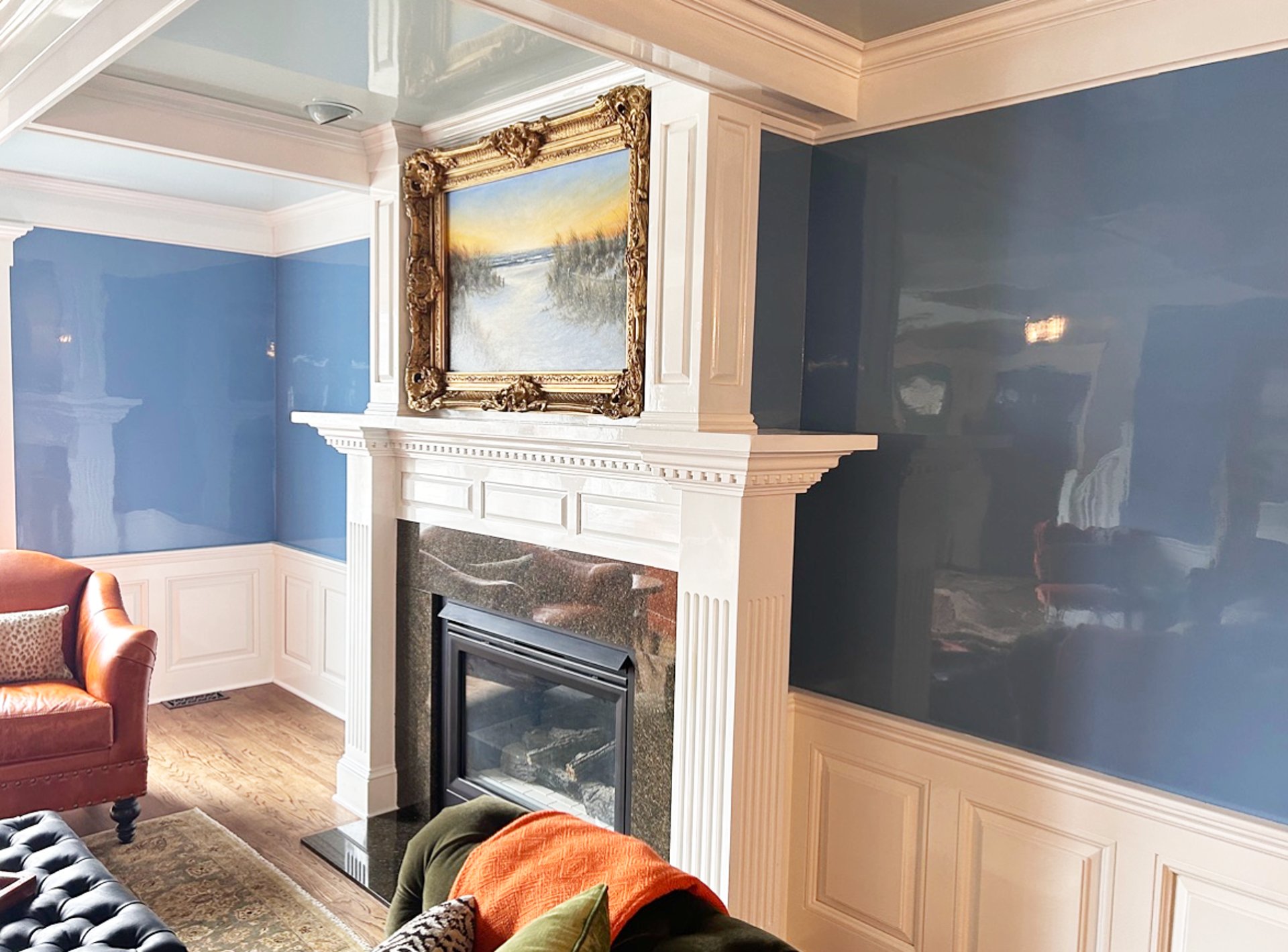
This teal-painted beadboard wainscoting demonstrates expert-level precision. Notice how each panel groove remains clean and sharp with zero bead buildup—the vertical grooves read as intentional architectural details, not paint-filled defects. The transition where the teal wainscoting meets the white wall above shows razor-sharp cut-in work with no paint bridging or bleed-through. The film thickness is perfectly uniform across flat panels and recessed grooves alike, which is why the light reflects evenly across the entire surface. This level of edge control and loading discipline prevents the paint from rounding over or obscuring the designed millwork geometry.
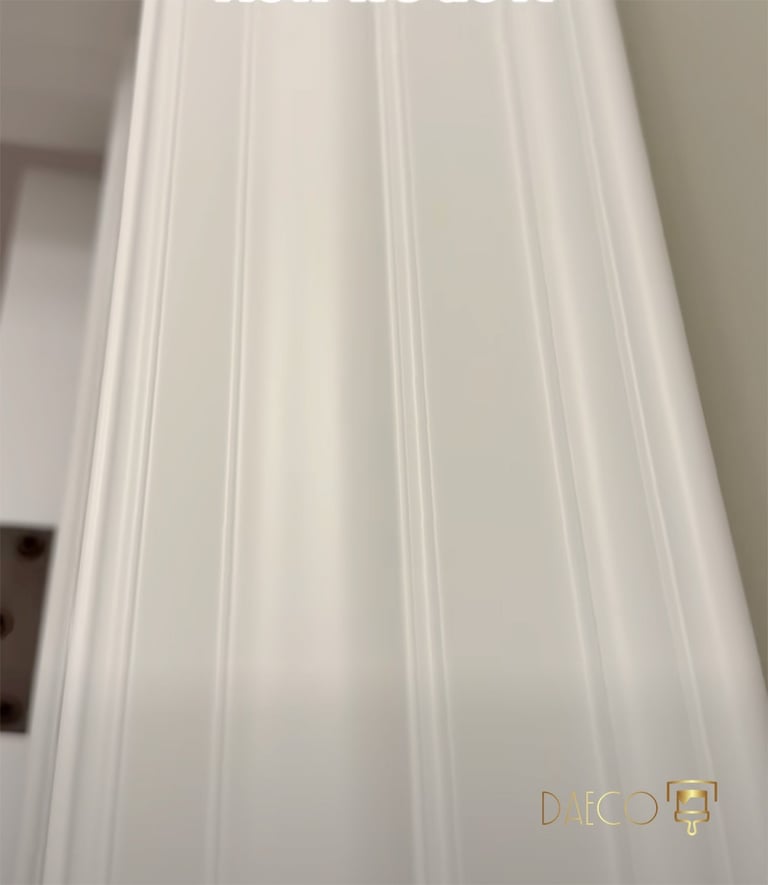
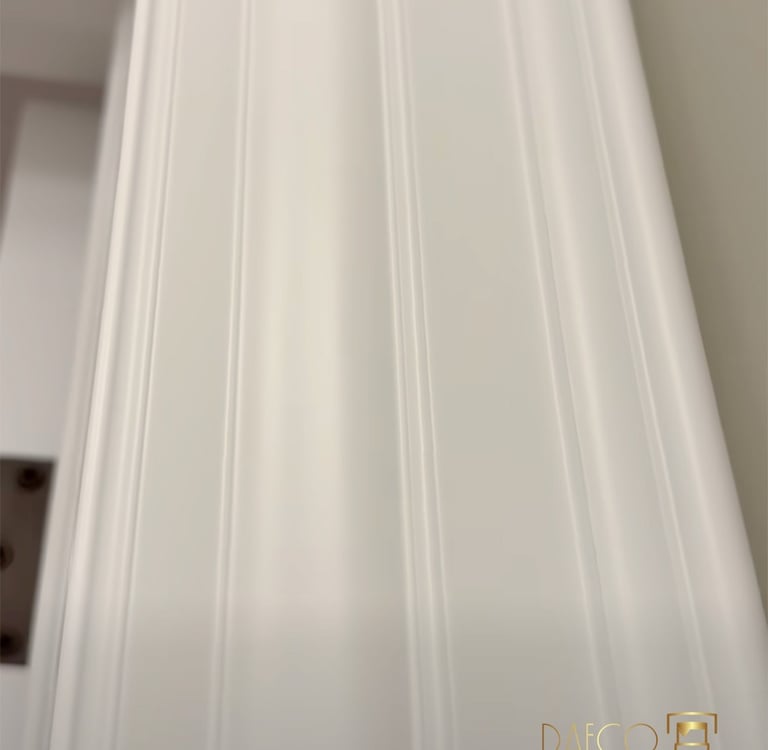
A true factory-grade finish on this white vertical panel door. There are zero visible brush strokes, no roller marks, and no bead lines along any of the panel grooves. The light reflects in a soft, continuous glow across the entire surface because the film is perfectly uniform in thickness. Look at the vertical panel grooves—they're clean and crisp with no zipper texture or paint accumulation. This level of smoothness prevents dirt from catching in micro-textures, making trim much easier to maintain. More importantly, uniform film build means uniform weathering, so the entire door ages together rather than failing in patches where paint was applied too thick or too thin.
Real-World Expert Painters:
✅ Even film build (critical for durability)
✅ Architectural lines stay crisp
✅ Light reflects smoothly
✅ Caulk joints visually disappear
✅ Finish reads as "factory" or "millwork grade"
✅ Longer service life (8-12 years interior, 8-15 years exterior)
Real-World Cons:
❌ Costs more (20-30% premium)
❌ Takes longer (30-50% additional project time)
❌ Requires real prep: sanding, conditioning, controlled application
This comes from:
Proper prep sanding
Edge conditioning before paint
Controlled roller loading
Back-brushing / back-rolling
Sequence discipline (not just "get paint on")
Understanding how light exposes defects
It looks manufactured, not painted.
⚖️ The Actual Difference
Standard painters apply paint.
Expert painters engineer the finish.
One focuses on coverage. The other focuses on film behavior, light response, and surface geometry.
That's why one photo reads flat and clean—and the other shows texture, buildup, and inconsistency once you actually look.
Application Technique: Where Quality Manifests
The visible difference between standard and expert painting traces directly to specific technical practices during surface preparation and coating application.
Surface Preparation Standards
Standard approach: Clean the surface, spot-prime obvious stains and repairs, apply one primer coat if substrate is raw. Total prep typically represents 25-30% of project time.
Expert approach: Engineer the substrate condition to accept uniform coating adhesion and flow. This includes:
Progressive sanding sequences that remove old coating gloss, level previous repairs, and create consistent surface profile.
Moisture testing on questionable surfaces. Colorado's dry climate masks moisture issues until coating failures appear.
Millwork conditioning addresses edge geometry before paint touches the surface. Sanding breaks sharp corners that cause coating pullback.
Substrate-specific primers matched to both surface chemistry and topcoat compatibility.
Prep typically represents 50-60% of total project time on expert-level work.
Loading and Distribution Control
Brush loading technique: Standard painters dip brushes 1/2 to 2/3 into the paint. Expert painters load brushes precisely—typically 1/3 to 1/2 depth—controlling exactly how much material transfers per stroke to ensure it flows without sagging.
Roller technique: Standard application loads rollers heavily for speed. Expert technique controls roller nap selection (typically 3/16" to 3/8" microfiber) to minimize stipple and back-rolls to level the film.
Spray application: Expert spray technique controls fluid pressure and atomization air to achieve uniform wet mil thickness. This requires understanding how Denver's altitude affects air pressure calibration.
Quality Inspection: What Denver Homeowners Should Examine
Before authorizing final payment on any painting project in Denver or Boulder, inspect these specific characteristics:
Critical Inspection Areas
Raking light examination: View all surfaces with light striking at acute angles—early morning or late afternoon natural light works perfectly. This reveals texture telegraphing, film thickness variation, and surface irregularities invisible under diffuse lighting.
Stand at the end of hallways and look down wall surfaces with side lighting. Any waviness, stipple patterns, or lap marks become obvious.
Edge geometry: Examine trim profiles, panel grooves, and architectural reveals up close. Run your finger along edges—you should feel the substrate geometry, not paint buildup. Expert work preserves the intended millwork profile.
Look for "picture framing" around panels and trim. Paint shouldn't be visibly thicker on edges than flat surfaces.
Bead line check: On paneled doors and millwork, inspect grooves under raking light for tiny dots or zipper texture. Expert work shows clean, sharp grooves with zero accumulation.
Caulk joint integration: Caulked seams should disappear visually—you know they're there structurally but can't see texture differences through the topcoat.
Sheen consistency: Under controlled lighting, sheen should appear uniform across all surfaces painted with the same product. Variations indicate film thickness inconsistency or contamination issues.
Cost vs. Value: Investment Analysis for Denver Homeowners
Long-Term Cost Comparison
The net savings from proper execution ranges $6,000-$10,000 per decade while maintaining superior appearance throughout the service life.
On high-visibility items like kitchen cabinets ($9,500–$14,000 + for expert refinishing), the durability advantage becomes even more significant.
When to Specify Expert vs. Standard Execution
Not every surface warrants expert-level execution, and not every application tolerates production shortcuts.
Projects Requiring Expert Execution:
Kitchen cabinet refinishing—one of the most scrutinized surfaces in any Denver home requires factory-grade finish quality.
Formal living areas and primary bedrooms—high-visibility spaces that represent the home's quality.
Historic home restoration—demands appropriate technique for period-accurate finishes and proper preparation of aged substrates common in neighborhoods like Washington Park, Park Hill, and Highlands.
Custom millwork and architectural woodwork—should maintain designed geometry and crisp detail lines.
Exterior surfaces on Denver's sun-exposed elevations—require engineering-level coating specification and application. Colorado's UV intensity, freeze-thaw cycles, and extreme diurnal temperature swings demand precision execution for adequate service life.
Projects Accepting Standard Execution:
Rental property turnover requiring acceptable cosmetic updates between tenants.
Basement spaces, storage areas, and mechanical rooms where finish quality doesn't affect function or aesthetics.
Temporary solutions on surfaces scheduled for replacement within 2-3 years.
Budget-constrained projects where extending service life isn't the primary goal.
How DAECO Painting Delivers Expert Results in Denver
Since 2002, DAECO Painting has specialized in precision coating application for Denver and Boulder County residential and commercial projects. Our approach combines material science, application engineering, and quality control systems developed over two decades serving Front Range properties.
Technical Approach
We specify coating systems based on substrate characteristics, exposure conditions, and performance requirements—not just color preferences. Colorado's climate creates unique challenges:
Intense UV at 5,280+ foot elevations
Humidity swings from 10% to 80%
Temperature ranges from -20°F to 105°F
Coating systems must perform across this entire envelope.
Surface preparation follows progressive sequences engineered for specific substrates. We test moisture content, verify adhesion on questionable surfaces, and solve substrate problems before applying topcoats.
Application technique emphasizes film uniformity, edge control, and architectural preservation. Our teams use controlled loading, back-brushing discipline, and spray parameters calibrated for altitude and humidity conditions.
Quality Control Standards
Every project includes lighting inspection under raking conditions before final approval. We catch and correct film thickness variations, texture issues, and detail problems before calling work complete.
Progressive inspection at prep completion, prime coat, and finish coat prevents compounding errors and maintains quality standards throughout execution.
Service Area Coverage
DAECO Painting serves Denver, Boulder, Lakewood, Arvada, Littleton, Highlands Ranch, and surrounding Front Range communities. Our local presence since 2003 means we understand regional architecture, climate challenges, and the specific coating performance requirements for Colorado properties.
Ready to see the DAECO difference? Contact us today for a detailed consultation.
Frequently Asked Questions
How can I tell if my current painter provides expert-level work?
Request references with contact information, then visit completed projects if possible. Examine trim edges under raking light for buildup and texture. Look at sheen consistency across surfaces. Ask about specific preparation steps—expert painters can describe progressive sanding sequences, edge conditioning techniques, and film thickness targets.
Does expert painting take significantly longer?
Precision execution typically adds 30-50% to project duration compared to production work. A one-week standard project might require 7-10 days for expert execution. The extended timeline reflects thorough preparation and controlled application technique, not inefficiency.
Can I specify expert execution for some areas and standard for others?
Absolutely. Many Denver homeowners request precision work on visible areas like living rooms, kitchens, and primary suites while accepting production-grade coverage on bedrooms, closets, and utility spaces. This approach optimizes budget allocation.
How do I verify a painter's expertise before hiring?
Ask specific technical questions: What grit sequence do you use for cabinet prep? How do you prevent edge buildup on raised panel doors? What mil thickness do you target for exterior topcoats? Expert painters provide detailed answers. Standard painters often give vague responses or defer to "standard industry practice."
What coating brands does DAECO recommend for Denver climates?
We specify products based on substrate and exposure conditions rather than single-brand loyalty. Fine Paints Of Europe, Farrow&Ball, Benjamin Moore, Sherwin Williams, and several commercial coating manufacturers produce excellent formulations when properly matched to applications. The critical factor is selecting appropriate products for Colorado's climate and applying them correctly.
How often should Denver homes be repainted?
Interior spaces with expert execution typically require repainting every 10-15 years unless damaged or deliberately changed. Exteriors in sun-exposed elevations need attention every 8-12 years with quality coating systems and proper application. Standard execution reduces these intervals by 40-50%.
DAECO Painting provides expert coating application services throughout Denver, Boulder, and Front Range communities. Contact us at [contact information] for project consultations and detailed proposals. Licensed, insured, and serving Colorado since 2003.
Ready for Your Custom Quote?
As we hope you've learned, we take every aspect of your house into account when determining the cost of painting your home. Get in touch with us so we can provide you a detailed cost for painting your home.