(303) 999-8864

Interior Painting Denver: How Many Coats Do You Really Need? (Expert Answer)
Interior painting Denver and Boulder: Why Colorado’s high UV and low humidity require a 2-coat minimum for luxury homes. Get the expert DAECO FPE System™ answer.
DAECO Painting Company | Denver Painting Experts Since 2003
4/3/202611 min read
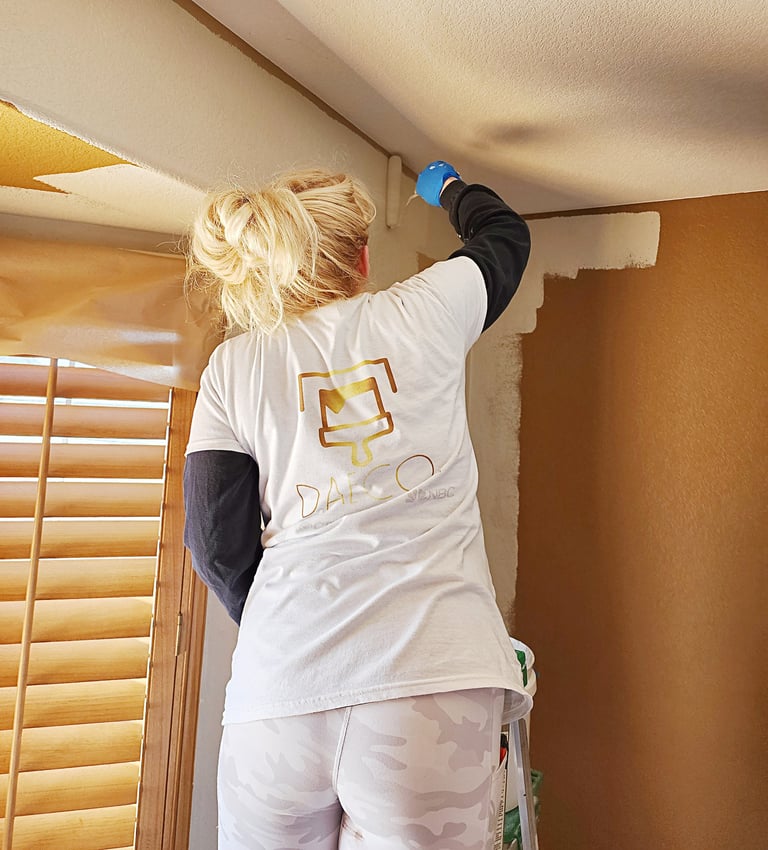
DAECO Painting · Interior Painting, Denver & Boulder · Serving Colorado since 2003
Most homeowners in Cherry Creek, Washington Park, and Boulder's Mapleton Hill ask the same thing before an interior repaint: "Can I stretch this to one coat and save a little money?"
In most homes served by interior painting companies in Denver the answer is no — and Colorado's climate is a significant reason why. At 5,000+ feet, UV exposure is roughly 25% more intense than at sea level. Seasonal humidity swings between 10% and 70%. Freeze-thaw cycles stress paint films from the outside, while HVAC cycling stresses them from within.
DAECO Painting has been applying coatings in Denver's luxury residential market since 2003. Every project we evaluate goes through the DAECO FPE System™ — Film, Prep, Environment — a field-tested process built specifically for Colorado conditions. What follows is how we think about coating decisions, and why cutting to one coat almost always costs more in the long run.
In over two decades of painting high-end homes across Denver and Boulder, we have never seen a one-coat system deliver long-term performance in a primary living space.
When one coat appears to "work," it is almost always a short-term visual result — not a complete coating system. The film is underbuilt. The durability is not there. And in Denver's climate, that gap shows up faster than it would almost anywhere else in the country.
If a painter recommends one coat for a primary living space in Denver, they are optimizing for price — not performance.
The DAECO Standard
Before anything else: the direct answer. In Denver homes, proper film build requires two coats in almost every scenario that involves a primary living space, a color change, or a durability expectation beyond two years.
How many coats of paint do Denver homes actually need?
Most interior walls → 2 coats minimum
New drywall → Primer + 2 coats
High-traffic areas (kitchen, hall, bath) → 2 coats required
Any color change → 2 coats required
One coat (any scenario) → cosmetic only — short-term use
Major manufacturers including Benjamin Moore and Sherwin-Williams specify two coats in their Technical Data Sheets to achieve proper film build and warranty compliance. This is not a contractor preference — it is the industry-backed standard for any coating system intended to perform.
Why This Matters in Denver Homes
Paint performance is not just a product decision — it is an environmental one. For stress-free residential painting services in Denver and Boulder, the climate creates specific stressors that most paint guides — written for coastal or mid-altitude markets — do not account for.
The DAECO FPE System™ — a statement of ownership
The DAECO FPE System™ is not a guideline — it is the evaluation framework we use on every project to determine coating performance in Colorado conditions. It was developed over two decades of field work in Denver and Boulder, where standard manufacturer specs routinely underestimate what the climate actually demands.
F — Film Build
Every professional coating is engineered to perform at a specific dry film thickness — typically 3–4 mils for residential interiors. One coat achieves roughly 50–60% of that target. In Denver homes, under intense UV and low humidity, an underbuilt film oxidizes and dulls faster, often within 18–24 months rather than the expected 7–10 years.
P — Surface Preparation
Prep determines adhesion. Sanding, patching, cleaning — these steps create the mechanical and chemical bond that anchors every coat. In older Denver bungalows and Boulder craftsman homes, variable substrate conditions — plaster, drywall, previously painted surfaces — require thorough assessment before the first coat is even opened.
E — Environment
At 5,000+ ft elevation, UV degradation of paint binder chemistry is roughly 25% more aggressive than at sea level. Combined with 300+ days of direct sun and the region's wide seasonal humidity swing, a coating system that performs reliably at sea level may underperform significantly in Denver. Proper film build is the primary mitigation.
Why one-coat systems fail faster in Denver than anywhere else
UV intensity — At 5,000+ ft elevation, UV breaks down underbuilt paint binders 25–30% faster than at sea level. Thin films chalk and fade within two winters.
Low humidity — Denver's winter humidity routinely drops below 15%. Paint skins at the surface while failing to through-cure, leaving the film brittle and prone to cracking.
Directional light — Denver's intense, low-angle light in south and west-facing rooms reveals sheen inconsistencies from underbuilt films that would be invisible in lower-UV markets.
Seasonal expansion — Colorado's 50°F+ daily temperature swings stress thin films mechanically. A two-coat system has the elasticity and bond strength to absorb that movement. One coat does not.
Step-by-Step: The DAECO Professional Process
Understanding what separates a durable finish from one that fails early comes down to process discipline at each stage.
Step 1 — Substrate Assessment
Before quoting or mixing anything, we evaluate surface porosity, existing finish condition, sheen level, and any water intrusion history. In Cherry Creek and Wash Park's older homes, this step routinely reveals hidden prep needs that a rush-job contractor would miss entirely.
Key Insight: At altitude, existing oil-based coatings — common in pre-1990 Denver homes — behave differently than modern latex systems. Adhesion testing before priming is standard in our process, not optional.
Step 2 — Surface Preparation
Patching, sanding, filling, and cleaning. This phase often represents 40–50% of a quality interior project's labor. Skipping or rushing it is the single most common cause of premature failure — regardless of how expensive the topcoat is.
Step 3 — Primer Selection and Application
Not all projects require a dedicated primer coat, but new drywall, drastic color changes, and stain-prone surfaces always do. We specify primers based on substrate, not habit. A properly primed surface dramatically improves the topcoat's leveling and adhesion.
Key Insight: In Boulder's higher-humidity micro-climates — north-facing walls, basement-adjacent rooms — a moisture-barrier primer before topcoat is not an upsell. It is structural protection.
Step 4 — First Coat Application
The first topcoat does the foundational work: it seals pores, begins the color transition, and establishes the base for proper film build. At this stage, the wall may look "done" to an untrained eye. It is not. Film thickness is typically still 50–60% of target.
Step 5 — Dry Time Compliance
Denver's low humidity accelerates surface drying but not through-cure. Applying a second coat before the first has fully cured compromises the intercoat bond and can cause lifting, wrinkling, or sheen inconsistency. We observe full manufacturer-specified recoat windows — not the minimums.
Step 6 — Second Coat and Film Verification
The second coat brings the film to its designed performance spec — full color saturation, uniform sheen, and the washability and durability homeowners expect. On luxury projects, we do a final sheen check under both artificial and natural light before calling the work complete.
Key Insight: On high-gloss and semi-gloss applications in kitchens and bathrooms, a light intercoat scuff-sand between coats eliminates telegraphed texture and produces the clean, mirror-level finish that distinguishes professional work from adequate work.
Cause → Effect: How One-Coat Systems Fail
The following data maps the direct relationship between shortcut applications and the specific environmental stressors of the Front Range.
Failure Mode (Cause):
Insufficient Film Build (Under 3 mils dry) Colorado Environmental Impact (Effect): High-Altitude UV Exposure. At 5,000+ ft, UV radiation is 25% more aggressive. Technical Result: Accelerated oxidation, surface chalking, and visible color fade within 12–24 months.
Failure Mode (Cause):
Skipped Primer (On new or bare drywall) Colorado Environmental Impact (Effect): Substrate Porosity. Denver’s low humidity causes uneven absorption rates. Technical Result: "Flashing" and "Hot Spots" (dull vs. shiny patches) visible under intense natural light.
Failure Mode (Cause):
Single-Coat Color Change Colorado Environmental Impact (Effect): Raking Light. Denver’s low-angle winter sun reveals even minor pigment gaps. Technical Result: Tonal inconsistency and "ghosting" of the previous color through the new film.
Failure Mode (Cause):
Rushed Dry-to-Recoat Window Colorado Environmental Impact (Effect): Low Relative Humidity (often under 15%). Paint "skins" over but fails to through-cure. Technical Result: Intercoat adhesion failure; the system remains brittle and prone to peeling or lifting within one season.
Failure Mode (Cause):
Improper Sheen Selection Colorado Environmental Impact (Effect): Mechanical Stress. Frequent HVAC cycling and dry air increase surface friction. Technical Result: Rapid burnishing (shiny spots) in high-traffic zones like kitchens and hallways.
Common Misconceptions
Myth: Paint-and-primer-in-one products are designed for single-coat coverage.
Reality: Combination products improve adhesion and hide minor color shifts — but they still rely on two coats to reach manufacturer-specified film thickness. Their technical data sheets confirm this. The "primer included" language refers to adhesion chemistry, not coverage replacement.
Myth: If it looks covered when wet, one coat is enough.
Reality: Wet paint has a very different reflectance than cured paint. Sheen inconsistencies, roller marks, and bare spots often become visible only after the first coat has dried — and only under the right lighting angle. This is why professional painters evaluate coverage under both artificial and natural light before making a coating decision.
Myth: Premium paint means you can skip a coat.
Reality: High-solids formulations from Benjamin Moore and Sherwin-Williams deliver better hide per coat — but their warranty coverage and performance specs still require two coats. Applying one coat of a premium product gives you a durable first layer. It gives you a complete system only with the second.
Myth: Airless sprayers achieve full coverage in one pass.
Reality: Spray application produces excellent atomization and uniformity — but film thickness per pass is typically lower than brush-and-roll, not higher. Two-coat requirements apply regardless of application method.
Cost and Value: What the Numbers Actually Show
The case for two coats is not abstract — it is quantifiable.
SystemTypical Upfront CostLifespan (Denver)MaintenanceValue RatingOne coat, no prepLowest1–3 yearsFrequent touch-upsPoorOne coat, proper prepLow–moderate2–4 yearsTouch-ups in 18 monthsBelow averageTwo coats, proper prepModerate6–10 yearsOccasional cleaningExcellentPrimer + two coatsModerate–higher10–12 yearsMinimal upkeepBest ROI
A one-coat application may reduce a project's initial cost by 20–25%. In most Denver homes, that saving disappears within three years — when the repaint cycle begins again ahead of schedule and with compounded prep requirements from the failing system.
Real Project Insight
Cherry Creek · Interior Repaint · DAECO Correction Project
A homeowner in Cherry Creek hired a low-cost contractor for what was quoted as a "refresh coat" on the main level. Within one Colorado winter, the results were visible under every light source in the home.
What we found:
Sheen inconsistency under natural light from the south-facing windows
Premature wear on high-traffic hallway walls after normal cleaning
Color pulling from the prior coat in raking light along the stairwell
No evidence of surface preparation on inspection
The DAECO correction:
Full surface re-prep including controlled sanding and patching
Tinted primer to neutralize color variation from the failed system
Two-coat application with Benjamin Moore Regal Select Eggshell
Final sheen verification under directional and natural light
The Preservation Principle: In a high-end interior, the failure of a coating system is not merely cosmetic. It signals to anyone who enters the home that the finish was applied without process discipline. Correcting it requires full re-prep — not a third coat over a compromised substrate. The cost of the correction exceeded the original "savings" from the one-coat approach by a significant margin.
Technical Insight: Coatings, Finishes, and Denver Considerations
Not all finishes behave the same under Denver conditions, and the right sheen for a room depends on more than personal preference.
Technical Finish Specifications: Denver & Boulder Residential Projects
Understanding how specific paint sheens react to Colorado’s unique atmospheric conditions is critical for long-term performance.
Flat / Matte Finish
Recommended Coats: 2–3 coats.
Denver Consideration: Low Humidity & Burnishing. Denver’s dry air (often below 15% humidity) makes flat finishes more prone to "burnishing" (shiny spots from friction).
Application: Best reserved for low-traffic areas like ceilings or formal dining rooms where washability is not a primary requirement.
Eggshell / Satin Finish
Recommended Coats: 2 coats.
Denver Consideration: The "Standard" for the Front Range. This finish provides the ideal balance between washability and sheen-forgiveness.
Application: The recommended all-purpose finish for Denver interiors; it handles the expansion/contraction of HVAC cycling while remaining easy to clean.
Semi-Gloss Finish
Recommended Coats: 2–3 coats.
Denver Consideration: Substrate Highlighting. In high-UV areas like South-facing kitchens, Semi-Gloss will reveal every substrate flaw.
Application: Requires intercoat sanding to achieve luxury results. Essential for moisture resistance in bathrooms and high-use trim.
High-Gloss Finish
Recommended Coats: 3 coats + Intercoat Sanding.
Denver Consideration: Mirror-Level Clarity. High-Gloss coatings are sensitive to the "skinning" effect caused by Denver’s rapid surface-dry times.
Application: Reserved for luxury trim and high-detail millwork in Cherry Creek and Boulder historic homes. Requires flawless mechanical preparation and precision application to avoid texture "telegraphing."
A Note for Architects & Designers: When specifying interior coatings for Denver residential projects, account for the altitude factor in recoat scheduling — typical dry-to-recoat windows on TDS sheets are calibrated for sea-level humidity. At 5,280+ feet, surfaces skin faster while through-cure lags. For projects requiring a specific sheen level under controlled lighting, contact us directly for a technical consultation before the specification is finalized.
Frequently Asked Questions
How many coats of interior paint does a Denver home actually need?
Most Denver interiors require two coats of paint for proper film build and durability. Colorado's high UV exposure, low humidity, and 5,000+ ft altitude accelerate coating breakdown — a properly applied two-coat system using a premium paint like Benjamin Moore Regal Select or Sherwin-Williams Cashmere lasts 6–10 years versus 2–4 for a one-coat application.
Is one coat of paint ever sufficient for an interior room?
One coat may work as a short-term cosmetic refresh if you are repainting with the exact same color on a properly sealed, undamaged surface in a low-traffic room. In all other scenarios — color changes, new drywall, high-traffic areas, or any project with a long-term durability expectation — two coats are required to meet manufacturer film-build specifications and perform reliably in Denver's climate.
Why does altitude affect how many coats of paint you need in Colorado?
At Denver's elevation, UV radiation is roughly 25% more intense than at sea level, which degrades paint binders faster when film build is insufficient. The region's extremely low winter humidity — often below 15% — also causes paint to skin quickly at the surface while slowing through-cure, meaning a single coat that appears dry may not have reached adequate film density for long-term performance or washability.
Before You Book: High-Stakes Questions We Get Every Week
Luxury homeowners and designers often have specific, practical concerns that general painting guides never address. Here are the most common — answered precisely.
How do you protect original hardwood floors during an interior spray or roll project?
We use paper-and-plastic systems with taped seams — not drop cloths alone — on hardwood floors in all Cherry Creek, Wash Park, and Boulder historic homes. Any floor with gap-prone planks receives a rubber-bead perimeter seal before we open a single can. Overspray from airless application is fully contained. You will see the protection plan in writing before day one.
What is the actual off-gassing timeline for low-VOC paints at Denver's altitude?
Standard low-VOC latex paints (under 50 g/L VOC) surface-dry in 1–2 hours at Denver's altitude and humidity. Meaningful off-gassing typically concludes within 24–72 hours with adequate ventilation. Full cure and hardness take 2–4 weeks. For households with high sensitivity concerns, we specify zero-VOC formulations (Benjamin Moore Natura, Sherwin-Williams Harmony) and schedule projects to allow 48-hour airing before occupancy — and we put that timeline in the project plan.
Can you match an existing custom color exactly for a touch-up on a multi-year-old finish?
We keep project color records on file for all DAECO clients. For non-DAECO original work, we use a spectrophotometer reading of the existing wall — not the can label — since paint shifts in tone during cure and aging. An exact match against the current wall color, not the original formula, is the correct target for any touch-up or repair work.
Will my pet or child be safe during and after an interior repaint?
We recommend that pets and children be out of the work area while painting is active and for 2–4 hours after completion of each day's work with standard low-VOC products. With zero-VOC formulations, that window shortens. We do not apply oil-based products in occupied homes. If you have specific sensitivities, let us know at estimate — we will spec accordingly and document it.
Related Reading · DAECO Resource Cluster
Why Surface Preparation Determines Every Interior Finish in Denver
Choosing the Right Paint Finish for Denver's UV and Humidity Swings
The DAECO FPE System™: How We Evaluate Every Colorado Coating Project
Coating decisions at DAECO are not based on shortcuts or assumptions — they are based on measured film build, substrate condition, and Colorado-specific performance requirements.
In Denver and Boulder, the difference between one coat and two is not cosmetic. It is the difference between a finish that lasts 2–3 years and one that performs for a decade or more. At 5,000+ ft elevation, with the UV intensity and temperature swings this climate delivers, the system is what matters — not the shortcut.
Proper film build requires two coats in Denver homes. That conclusion is consistent across manufacturer specifications, field performance data, and two decades of projects across Cherry Creek, Washington Park, Boulder, and the surrounding Front Range. It is not a sales pitch. It is what the conditions require.
If you are considering an interior repaint and want a straight technical evaluation of what your specific home requires — no pressure, no guesswork — we are glad to walk through it with you.
In Denver homes, two coats is not best practice — it is the baseline requirement for a coating system that lasts.
DAECO Painting · Interior & Exterior Coatings · Denver, CO · Serving the Front Range since 2003
Ready for Your Custom Quote?
As we hope you've learned, we take every aspect of your house into account when determining the cost of painting your home. Get in touch with us so we can provide you a detailed cost for painting your home.